Call (678) 748-3578Get a Quote

Thrare  ›  Teaming and joint pursuits

A teaming partner that names its limits before the bid, not after the award.

Rare Earth Ltd is a DBE, ACDBE and MBE certified subcontractor and teaming partner in Georgia. Rare Earth Ltd holds no surety bond, and every coverage and certification not held is printed on this page rather than raised after an award.

The bid clock

Why does a prime spend more time vetting a small teaming partner than pricing one?

A prime spends that time because the partner's paperwork, not the partner's price, is what can make a submission non-responsive.

Pricing a flatwork package or an exterior package takes an estimator an afternoon. Assembling a current certification record, a certificate of insurance naming the exact holder the file wants, a Form W-9 signed in the legal entity name, and a notarized Georgia contractor affidavit takes as long as the slowest party on the team, and the deadline moves for nobody.

Two published deadlines set that clock, and a prime cannot negotiate either one. Section 26.81(c) of 49 CFR requires that certifications by a Unified Certification Program be "pre-certifications; i.e., certifications that have been made final before the due date for bids or offers on a contract on which a firm seeks to participate as a DBE." Georgia's State Purchasing Division writes the insurance side into document SPD-SP048: "The certificate shall be furnished no later than ten (10) business days after notification of the State's intent to award a contract."

A teaming partner is therefore useful in proportion to how fast that partner hands over documents which already exist, and expensive in proportion to how many have to be created inside the window. Rare Earth Ltd publishes both lists on this page, the one that exists and the one that does not, because a prime who discovers the second list at the bid deadline has lost the bid rather than the scope.

The directory

What does a DBE directory listing prove about a teaming partner, and what does it not prove?

A DBE directory listing proves a certification decision was made, and the regulation requiring the directory says in the same paragraph that the listing proves nothing about capacity.

Section 26.31(d) of 49 CFR requires every Unified Certification Program directory to carry "a prominently displayed disclaimer" stating that "the information within the directory is not a guarantee of the DBE's capacity and ability to perform work." That sentence is written into the regulation by the regulator and it cuts against the certified firm, which is exactly why a certified firm should quote it rather than bury it.

Section 26.31(a) sets out what the listing does carry for each firm: "its business address, business phone number, firm website(s), and the types of work the firm has been certified to perform as a DBE and/or ACDBE." Section 26.31(d) also requires the directory to be an online system searchable by physical location, NAICS code and work description. Section 26.81(g) of 49 CFR requires each program to maintain the directory, to "make the directory available to the public electronically, on the internet", and to update it "by including additions, deletions, and other changes as soon as they are made."

Read together those paragraphs describe a locator, not a qualification. A prime screening a certified partner learns more from three things a directory cannot show: which scopes the firm self-performs with its own crews, which equipment the firm owns for the containment or handling a scope requires, and which compliance documents the firm produces inside a bid window. Rare Earth Ltd answers all three further down this page.

Timing

When does a subcontractor's certification have to be final relative to bid day?

A subcontractor's DBE certification has to be final before bids are due, and an application still in process on bid day is not a certification a prime can carry into a submission.

Section 26.81(c) of 49 CFR states the rule as pre-certification: certifications "that have been made final before the due date for bids or offers on a contract on which a firm seeks to participate as a DBE." A prime asking a candidate partner for a certification date rather than a certification status is asking the question the regulation actually turns on.

One certification covers the whole state, which saves a prime a duplicate diligence pass. Section 26.81(a) of 49 CFR requires every United States Department of Transportation recipient in a state to participate in a Unified Certification Program, provides that the program "shall make all certification decisions on behalf of all DOT recipients in the state", and makes those decisions "binding on all DOT recipients within the state". Section 26.81(b)(2) puts the same point from the applicant's side: a firm "is required to apply only once for a DBE certification that will be honored by all recipients in the state". A prime pursuing a state highway package and a transit package in the same year does not need a separate certification of the same subcontractor for each buyer.

The two certification programs behind the pair Rare Earth Ltd holds are separate and are not interchangeable. Section 26.5 of 49 CFR sets the DBE test as a "for-profit small business concern" at least 51 percent owned by "individuals who are both socially and economically disadvantaged", whose "management and daily business operations are controlled" by those same owners. Section 23.3 of 49 CFR defines an Airport Concession Disadvantaged Business Enterprise as "a firm seeking to operate as a concession" meeting the same 51 percent ownership and control test, with an added clause for stock ownership in a corporation. An ACDBE certification therefore belongs to the airport concession program and does not substitute for a DBE certification on a construction solicitation.

HeldDBE and ACDBE, Georgia Unified Certification ProgramVerifiable in the public Georgia UCP directory rather than against this page
HeldMinority Business EnterpriseHeld permanently, stated without qualification
HeldSmall Disadvantaged BusinessA self-representation made in the federal registration, not a third-party certification
RegistrationSAM registration activeChecked at sam.gov against the identifiers below
IdentifierCAGE 9JAV8A location identifier assigned by the Defense Logistics Agency, not a credential earned
IdentifierUEI Z4WKS4UE8NJ6A 12 character value the government grants and owns, used to identify the entity
EnrollmentE-Verify 2748681Records enrollment and an authorization date, and says nothing about any individual worker
Not heldHUBZone, 8(a), SOC 2Rare Earth Ltd does not hold any of the three, in any stage, and none is claimed on any submission
Not heldSurety bondRare Earth Ltd holds no surety bond of any kind

Goal credit

Does adding a certified subcontractor earn the prime goal credit on a contract?

Rare Earth Ltd will not answer that question for a contract Rare Earth Ltd has not read, and no honest subcontractor answers it in advance.

Whether participation counts toward a goal is decided by the solicitation and by the agency rules funding it. The United States Department of Transportation issued an interim final rule in 2025 which suspended DBE goal-counting, so a contractor promising that a subcontract satisfies a federal goal is making a representation about program rules rather than about its own certification.

The split worth holding onto is this. A certification is a fact a prime verifies today in a public directory. What a certification earns on one procurement is a question for the contracting officer on that procurement. The longer treatment of that distinction, with the registry links a compliance officer needs, sits on the credentials and compliance page.

Your proposal

Can a prime write a subcontractor's experience into its own proposal?

Federal evaluation rules allow a prime to do exactly that, inside a limit worth reading before the narrative is drafted.

Section 15.305(a)(2)(iii) of the Federal Acquisition Regulation permits an evaluation to take account of "information regarding predecessor companies, key personnel who have relevant experience, or subcontractors that will perform major or critical aspects of the requirement when such information is relevant to the instant acquisition". The operative words are major or critical aspects. A subcontractor's record supports the part of the work that subcontractor will perform, and a narrative borrowing a partner's record for a scope the partner is not named on invites the one question an evaluator is trained to ask.

Two paragraphs of the same regulation cut the other way, and both are worth quoting to a compliance officer who is nervous about a small partner. Section 9.104-1(c) provides that "A prospective contractor shall not be determined responsible or nonresponsible solely on the basis of a lack of relevant performance history". Section 15.305(a)(2)(iv) provides that "In the case of an offeror without a record of relevant past performance or for whom information on past performance is not available, the offeror may not be evaluated favorably or unfavorably on past performance."

Rare Earth Ltd has performed no federal prime contract and therefore holds no CPARS evaluation. Under the paragraph just quoted, an absent federal record is neutral in a federal evaluation rather than negative, and Rare Earth Ltd offers commercial and county records in its place. Those paragraphs govern federal acquisitions. A county, a school district or a private prime is under no obligation to follow them, and a buyer borrowing the test as a screen rather than applying it as a rule is using the Federal Acquisition Regulation the way this page intends.

Bonding

What bonding can Rare Earth Ltd carry on a team, and what can it not?

Rare Earth Ltd holds no surety bond, and Rare Earth Ltd does not pursue work as prime where a performance bond is required.

Rare Earth Ltd cannot furnish a bid bond, a payment bond or a performance bond on any solicitation. On a team led by a bonded prime the bond obligation sits with the prime, which is the ordinary arrangement on public construction and the reason this position costs a team nothing at all.

Stated as a screen a prime applies in one minute, the position reads as follows. A solicitation requiring a bond from the prime is a solicitation Rare Earth Ltd answers as a subcontractor or a teaming partner. A solicitation requiring a separate bond from each subcontractor is a solicitation Rare Earth Ltd declines, at the pre-bid meeting rather than at award. The same position is stated for public buyers on the agencies and municipalities page and for construction managers on the general contractors page.

Naming a bond limitation early is a qualification signal rather than a weakness, because the expensive version of this conversation is the one that happens after a prime has already built a submission around a partner who cannot execute the bond forms.

Insurance

Which insurance does Rare Earth Ltd bring to a team, and which coverages have to sit elsewhere?

Rare Earth Ltd carries general liability insurance and issues a certificate of insurance to a named holder on request.

Rare Earth Ltd does not carry workers compensation, does not carry commercial auto, does not carry umbrella liability, and does not carry professional liability. Coverage limits are not published on this website. A limit belongs on the certificate issued to the holder a prime names, and that is where a limit appears.

A prime uses those two lists as a scope screen before spending an estimator's afternoon. Where a prime's contract template requires a coverage from the second list, the answer arrives at the pre-bid meeting and the answer is no. Where the template requires general liability with a named certificate holder, the certificate goes out on the day the holder name and address arrive, spelled the way the prime's system stores them, because a certificate naming the construction manager when the file wants the ownership entity is a certificate that gets rejected and re-requested a week later.

Flow-down

What does Georgia's own purchasing guidance tell a buyer to collect from a vendor?

Georgia publishes what a state entity expects a vendor's certificate to show, and a prime drafting its own flow-down clause should read that document before writing one.

The Georgia Department of Administrative Services, State Purchasing Division, issues Insurance and Bonding Guidelines as document SPD-SP048, prepared by DOAS Risk Management Services for state entities and dated November 2015.

For Goods and Ancillary Services the recommended limits printed in SPD-SP048 are a Commercial General Liability each occurrence limit of $1,000,000, a personal and advertising injury limit of $1,000,000, a general aggregate limit of $2,000,000 and a products and completed operations aggregate limit of $2,000,000, with automobile liability at a combined single limit of $1,000,000, umbrella liability at $2,000,000, and workers compensation at "Statutory Limits - required in all contracts". The Custodial Services category carries those same figures and marks workers compensation "Required for all Contracts" with "NO EXEMPTIONS". The Landscaping / Lawn Care category carries them too and adds, where "herbicide, fungicide, pesticide or other chemical application is involved", Environmental Impairment Liability with a one year extended reporting period.

Three mechanics in the same document are the ones a prime administers rather than prices. On additional insured status SPD-SP048 reads, "The vendor shall add the 'State of Georgia, its officers, employees and agents' as an additional insured under the commercial general, automobile and umbrella liability policies", and the named policies change by service category. On cancellation SPD-SP048 requires that "All policies shall contain a provision that coverage afforded under the policies shall not be canceled, changed, allowed to lapse, or allowed to expire until thirty (30) calendar days after written notice has been given to the state certificate holder on the certificate of insurance." On the carrier itself SPD-SP048 requires that "All policies must be issued by an insurance company licensed to do business in the State of Georgia, with a minimum AM Best rating of A-, and signed by an authorized agent."

SPD-SP048 then lists eleven items a certificate must provide, which a prime's compliance staff can run as a rejection checklist:

  • name and address of the authorized agent
  • name and address of the insured
  • name of the insurance company, licensed to operate in Georgia
  • description of coverage in standard terminology
  • policy period
  • limits of liability
  • name and address of the certificate holder
  • acknowledgment of notice of cancellation to the state
  • signature of the authorized agent
  • telephone number of the authorized agent
  • details of policy exclusions in the comments section of the certificate

Four qualifiers travel with every figure above and none of them is optional. DOAS calls the limits "recommended minimum insurance limits" and states that the categories and limits "are to be used as guidelines and are indicative of best practices but are not exhaustive. Your insurance needs may be higher (or lower)." SPD-SP048 is dated November 2015, so the date belongs beside the citation instead of an implication of current-year guidance. SPD-SP048 contains no pressure washing category at all: Custodial Services and Landscaping / Lawn Care are the nearest published analogues and are named here as analogues, never as a pressure washing requirement. And SPD-SP048 describes what one public buyer asks of any vendor, which is a separate subject from what a particular contractor carries.

Statutory employer

Why does a prime verify a subcontractor's workers compensation coverage?

A prime verifies coverage because Georgia's workers compensation statute can reach the contractor above an uninsured employer.

The Georgia State Board of Workers' Compensation writes that a contractor subject to the Workers' Compensation Law who sublets part of its contract work "may be liable for coverage for the employees of the subcontractor if the subcontractor has not obtained workers' compensation insurance coverage." The Board writes "may be liable" rather than "is liable", and that qualifier belongs in every restatement of the sentence.

O.C.G.A. 34-9-8(a) provides that "A principal, intermediate, or subcontractor shall be liable for compensation" to "any employee injured while in the employ of any of his subcontractors engaged upon the subject matter of the contract". Subsection (d) then limits where the section applies at all: "This Code section shall apply only in cases where the injury occurred on, in, or about the premises on which the principal contractor has undertaken to execute work or which are otherwise under his control or management."

That limit matters, and restatements of the statute drift away from it. O.C.G.A. 34-9-8 reaches a principal, an intermediate or a subcontractor, and subsection (d) ties the exposure to premises the principal contractor has undertaken to work on or otherwise controls. O.C.G.A. 34-9-8 does not make every property owner the statutory employer of an uninsured contractor's injured worker, and a page saying otherwise has overstated the statute.

On the threshold underneath all of this, the Georgia State Board of Workers' Compensation states that "Every employer, individual, firm, association, or corporation, regularly employing three or more persons, part-time or full time, shall provide workers' compensation insurance coverage", and adds that "Exempted officers of corporations or exempted members of limited liability companies shall not reduce the number of employees for this purpose." A prime taking these paragraphs to its own counsel is using them correctly. A prime taking them from any contractor's web page as legal advice is not.

Certificates

What does a certificate of insurance prove to the prime who collects it?

A certificate of insurance proves a policy existed on the day the certificate was issued, and Georgia's rule on certificates states on the face of the document that the certificate proves nothing more.

Rule 120-2-103-.05 of the Georgia Administrative Code requires the certificate to carry this statement: "This certificate of insurance is issued as a matter of information only and confers no rights upon the certificate holder. This certificate does not amend, extend or alter the coverage, terms exclusions and conditions afforded by the policies referenced herein."

Rule 120-2-103-.07 goes further and prohibits the practice a prime's contract clause sometimes assumes. A certificate "which purports to affirmatively or negatively amend, extend, modify or alter in any way the coverage" is prohibited, and a certificate "shall not confer to a certificate holder new or additional rights" beyond what the referenced policy expressly provides. A prime needing additional insured status therefore needs a policy endorsement, and asking a subcontractor to write that status onto a certificate asks for a document the rule forbids.

Rule 120-2-103-.08 attaches the penalty, and the penalty runs in the direction most contract templates get backwards. A violation carries "a fine not to exceed $5,000 per violation", assessed under the Commissioner's rule against the party issuing a non-compliant certificate. Rule 120-2-103-.03 provides that the regulation "shall apply to all certificate holders, policyholders, insurers, insurance producers, and certificate of insurance forms". A fine of that kind is not a penalty on a contractor for lacking coverage, and reading it as one misreads the rule.

Public contracts

What does a Georgia public contract make a prime collect from its subcontractors?

A Georgia public contract makes the prime collect an executed affidavit from each subcontractor, not a screenshot of an enrollment page.

Georgia Department of Labor Rule 300-10-1-.03 requires a contractor to provide an executed affidavit documenting participation in a federal work authorization program, the contractor's employee-count category, and confirmation that the contractor will obtain the same attestation from its own subcontractors. Rule 300-10-1-.07 sets out the contractor affidavit and agreement itself, which verifies compliance with O.C.G.A. 13-10-91 and states the federal work authorization program user identification number together with the date of authorization. Those two data points are the reason a bare claim of enrollment is not evidence.

The headcount thresholds in Rule 300-10-1-.02 are historical rather than live. The requirements phased in at 500 or more employees on or after July 1, 2007, at 100 or more employees on or after July 1, 2008, and then "On or after July 1, 2009, to all other public employers, their contractors, or subcontractors". A small subcontractor on a Georgia public job sits inside the rule, and quoting the 500-employee threshold as the current test is wrong.

Rare Earth Ltd's E-Verify company identification number is 2748681, and the authorization date travels on the affidavit rather than on this page. Two limits on what that number means are worth stating plainly. E-Verify describes its own function as comparing "information entered by an employer from an employee's Form I-9" against records held by the Department of Homeland Security and the Social Security Administration, so the process begins with a completed Form I-9 and an E-Verify number never stands in for Form I-9 compliance. And Subject 300-10-1 reaches public employers together with the contractors and subcontractors working for them, so a private property management contract is outside the rule entirely.

Payment

What happens to a prime's payment file if a subcontractor's Form W-9 is wrong?

A wrong Form W-9 creates an obligation for the prime rather than a penalty for the subcontractor.

According to the Internal Revenue Service, "There are situations when the payer is required to withhold at the current rate of 24 percent", and one of those situations arises "Under the BWH-B program because you failed to provide a correct taxpayer identification number (TIN) to the payer for reporting on the required information return". The payer in a teaming arrangement is the prime writing the subcontract check, which is why a prime's accounts payable group asks for the form before the first invoice instead of after it.

Two clerical details prevent that outcome. According to the Internal Revenue Service the form's purpose is to "provide your correct Taxpayer Identification Number (TIN) to the person who is required to file an information return with the IRS", so a Form W-9 is furnished to the requester and is not filed with the IRS by the contractor completing it. And the legal name has to match the payment record: Rare Earth Ltd is the legal entity and Thrare Contracting is the trade name, so a supplier record opened under the trade name against a form signed in the legal name is the mismatch that produces a notice months later.

The 24 percent rate is what the Internal Revenue Service publishes as current, and the rate has changed before, standing at 28 percent prior to the 2017 tax act. A prime taking a tax position on the number should read the current Internal Revenue Service page rather than this one.

Workshare

Which scopes does Rare Earth Ltd take as workshare, and which does Rare Earth Ltd decline?

Rare Earth Ltd takes the scopes it self-performs with its own crews, and declines the rest in writing at the pre-bid stage.

Concrete and flatworkTakenSidewalk, pad, curb and flatwork repair or replacement, sequenced against a released work area rather than against a calendar
Striping and layoutTakenLot and deck layout, stall striping, directional markings and accessible stalls, set out and measured before paint leaves the truck
Exterior and deck cleaningTakenFacades, walkways, entries, hardscape and structured parking, worked in sections on an occupied site
Debris and haul-offTakenConstruction debris and bulk removal, separated where the contract carries a diversion figure to report
Property preservationTakenBoard-up to specification, securing, lock changes and winterization, including time-critical work between phases
Materials and recycling logisticsTakenRecycled aggregate supply and diversion, with the documentation a public contract needs behind it
Bonded prime roleDeclinedNo surety bond is held, so a bonded prime role is not available on any solicitation
HUBZone, 8(a) or SOC 2 set-asidesDeclinedRare Earth Ltd does not hold HUBZone, does not hold 8(a) status and does not hold a SOC 2 attestation, so a submission requiring one is declined at the pre-bid
Scopes needing coverage not carriedDeclinedA subcontract requiring workers compensation, commercial auto, umbrella or professional liability from the subcontractor is declined
Licensed trade scopesDeclinedRare Earth Ltd does not describe itself as a general contractor on a scope requiring a license not verified for that jurisdiction

The reason the declined rows are printed beside the taken rows is that a teaming decision is made on the declined list. A prime can read a capability list on any contractor's website. Nobody publishes the other list, and the other list is what determines whether a submission survives a responsiveness review.
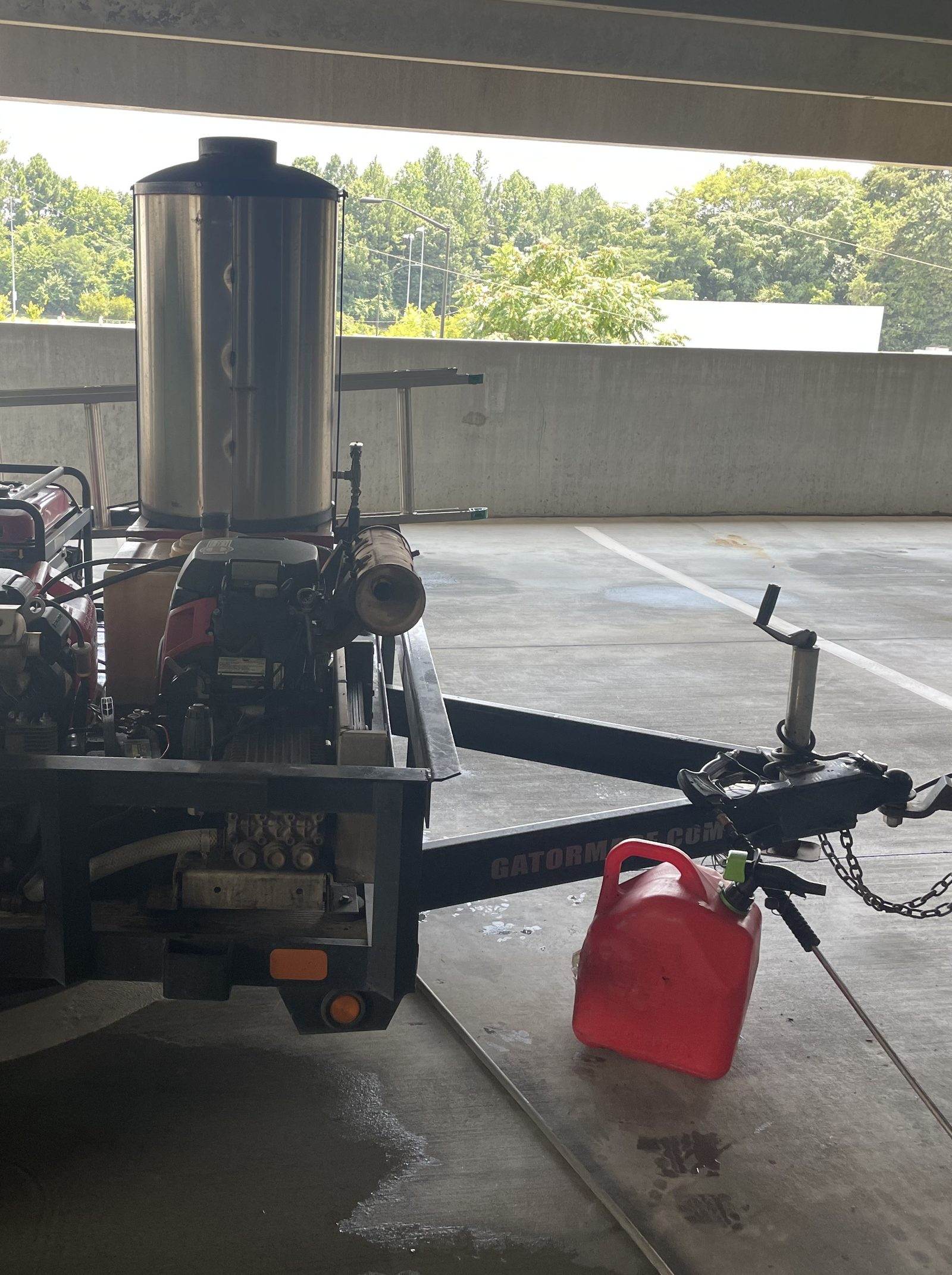
Equipment staged on an occupied parking deck at the start of a shift.

Sequence

How does a workshare move from teaming agreement to closeout?

Seven steps, and the first two happen before a price exists.

  1. Solicitation read and fit answerRare Earth Ltd reads the solicitation, not the summary, and returns a fit answer naming the scopes taken, the scopes declined, and any bond or coverage requirement that ends the conversation.
  2. Written workshare and exclusionsThe workshare is written as a scope with its exclusions attached, so the boundary between the prime's package and the subcontract sits in a document at proposal stage rather than in a memory at closeout.
  3. Compliance package to the primeCertification record, certificate of insurance to the named holder, Form W-9 in the legal entity name, the E-Verify number for a Georgia public affidavit, and the identifiers a buyer verifies independently.
  4. Bid supportPricing, the scope narrative for the workshare, and answers to the prime's clarification questions inside the prime's own internal deadline rather than the buyer's.
  5. Award and schedule lockOn award the workshare dates are locked against the prime's schedule, with a named contact on each side who can confirm work area release.
  6. Performance and reportingRare Earth Ltd runs its own inspection criteria, deficiency log and corrective action on its workshare and reports into the prime's project controls in the format those controls already use.
  7. Closeout evidenceAcceptance evidence, the photographic record, disposal or diversion documentation where the contract requires it, and invoice support handed over as one package rather than reconstructed on request.

The number

What is inside a workshare number, and what sits outside it?

Most disputes on a small workshare are arguments about inclusion rather than arguments about rate, so the boundary is written down before the work starts.

Inside the workshare number: mobilization, labor, supervision of the workshare, equipment, water handling and containment where the scope produces runoff, consumables, cleanup of the area Rare Earth Ltd worked in, and the closeout evidence package the contract requires for acceptance.

Outside the workshare number, and quoted separately when a project needs it:

  • work outside the released area, because a released area is the unit the schedule is built on
  • remobilization caused by a work area that was not released at the confirmed time
  • after-hours, overnight or weekend sequencing where the prime's schedule requires it
  • disposal of material Rare Earth Ltd did not generate
  • permits and fees held in the prime's name
  • any bond premium, because Rare Earth Ltd holds no surety bond and cannot furnish one at any price
  • certified payroll administration where the contract carries a wage determination
  • scope added after the workshare document is signed

Change to a signed workshare is handled in writing before the work happens. A verbal addition on a small package is how a prime ends up holding an invoice nobody remembers authorizing, and Rare Earth Ltd would rather lose the addition than bill a prime for a surprise.

Jurisdiction

What does a prime bidding in unincorporated Gwinnett County need from a washwater subcontractor?

A prime needs a subcontractor who collects the wash water, because the county guideline makes the cleaner and the property owner jointly responsible for where that water ends up.

Gwinnett County Storm Water Management Division publishes Water Quality Protection Guideline WQ-1, "Surface Cleaning", dated 04/05/2007, as the minimum requirements for compliance with the county's Illicit Discharge and Illegal Connection ordinance. Section 3.1(2) of WQ-1 states that "Except as allowed by section 3.2.1.4 of this guideline, washwater generated during surface cleaning must never be allowed to enter into a storm drain."

The sentence a prime should read twice is Section 3.1(11): "As the generator of the washwater the surface cleaner is considered jointly responsible with the property owner for its appropriate disposal." Joint responsibility is a risk allocation question on a team, not a housekeeping question, and it is the reason the containment method belongs in the subcontract rather than in a conversation on the first morning.

Gwinnett County also publishes a screening tool for buyers. Section 4(2) of WQ-1 records that the county "has established a 'List of Businesses Capable of Collecting Surface Cleaning Washwater.'" Operators apply on Form WQ-1c, "will be required to demonstrate the capabilities of their equipment", the list "will be supplied to the public", and inclusion "does not constitute an endorsement of the operator by the county." Rare Earth Ltd is not on that list, and no page on this website should be read as implying otherwise.

Two boundaries keep the county numbers honest. Sec. 100-21(e) of the Gwinnett County Code of Ordinances provides that "The provisions of this article shall apply throughout the unincorporated area of the county", so the ordinance does not reach Lawrenceville, Duluth, Snellville, Suwanee, Buford, Lilburn, Norcross or Sugar Hill, each of which runs its own illicit discharge instrument at a city address. And Sec. 100-27(f) of that same ordinance, not any federal statute, is the source of the penalty figure: "Upon conviction, such person shall be punished by a fine not to exceed $1,000.00 or imprisonment for 60 days or both. Each act of violation and each day upon which any violation shall occur shall constitute a separate offense."

The teaming point underneath the citations is that a jurisdiction has to be read per address rather than per county. Rare Earth Ltd does that read before a bid and hands the prime the instrument that actually governs the site, which is a cheaper artifact to produce at bid time than a violation notice is to answer later.

The record

What can Rare Earth Ltd document, and what has Rare Earth Ltd not done?

The record below is what a job file or a contract file supports, and the figures are floors rather than exact amounts.

RecordWhat it coversFigure
Fulton County Department of Public WorksRecycled aggregate supplied to a county public works buyer, one engagement$198,000+
MCS Chainstore MaintenanceFacility and grounds work under a single commercial account$50,000+
Vacant complex preservationUnits preserved to HUD specification20 units
Multifamily emergency securingDoors and windows secured at one property54 openings
Projects completedMultifamily, commercial and public property work since 2020, counted as projects rather than as contract value500+

The figures above are not summed here. Each is recorded as a floor rather than an exact contract value, so a total would carry more authority than the underlying files support, and the project count is a count rather than a value.

One public award belongs on a teaming page because a prime reads award language for what it does not say. Gwinnett County Public Schools awarded Bid B-2622LM on 2026-08-31 for a term running 2026-09-01 to 2027-06-30. The award is a place in a multi-award on-demand vendor pool in which 12 of 12 responsive bidders were awarded. Gwinnett County Public Schools published no dollar value, the district states in writing that participation "does not guarantee any minimum amount of work", and no work has been performed under the award. What the award evidences is a completed competitive procurement, and nothing about revenue.

What Rare Earth Ltd has not done is stated with the same directness. Rare Earth Ltd has performed no federal prime contract, holds no CPARS evaluation, and has never been the bonded prime on a public construction contract. The itemized file, with the verification path for each line, sits on the past performance page.

From you

What does Rare Earth Ltd need from a prime before bid day?

Six items, and four of them take a minute each.

  • the solicitation itself rather than a scope summary, because the bond clause, the coverage clause and the certification clause are the three that end or start a conversation
  • the certificate holder name and address exactly as the prime's compliance system stores them, since a certificate naming the wrong entity is rejected and re-requested
  • the endorsements the prime's template requires, named as endorsements rather than as limits, because Rule 120-2-103-.07 forbids a certificate from creating a right the policy does not grant
  • whether the contract is a public one, since a public contract in Georgia pulls in the contractor affidavit with its user identification number and authorization date
  • the prime's internal submission deadline, which is the deadline that governs, not the buyer's
  • the site address, so the governing illicit discharge instrument is identified before a containment method is priced

Rare Earth Ltd names a coverage, a bond or a certification it does not hold as soon as the requirement surfaces rather than after a scope is written, because a no at the paperwork stage costs a prime an email and a no at award costs a prime a schedule.

Questions

What primes ask before adding a certified partner to a bid.

The questions that come up between the pre-bid meeting and the submission.

Is Rare Earth Ltd bonded, and can Rare Earth Ltd be the prime on a bonded job?

No to both. Rare Earth Ltd holds no surety bond and cannot furnish a bid bond, a payment bond or a performance bond, so Rare Earth Ltd does not pursue work as prime where a performance bond is required. On a team led by a bonded prime the bond obligation sits with the prime, which is the ordinary arrangement on public construction.

Does a DBE directory listing prove a teaming partner can perform the work?

No, and the regulation requiring the directory says so. Section 26.31(d) of 49 CFR requires every Unified Certification Program directory to carry a prominently displayed disclaimer stating that "the information within the directory is not a guarantee of the DBE's capacity and ability to perform work." A prime should treat the listing as a locator and ask separately which scopes the firm self-performs, what equipment the firm owns, and which compliance documents the firm can produce inside the bid window.

Can a prime cite a subcontractor's experience in a federal proposal?

Yes, within the limit the regulation sets. Section 15.305(a)(2)(iii) of the Federal Acquisition Regulation permits an evaluation to take account of information about "subcontractors that will perform major or critical aspects of the requirement when such information is relevant to the instant acquisition". A subcontractor's record supports the scope that subcontractor is named to perform, and borrowing it for a scope the partner is not named on invites the question an evaluator is trained to ask.

Which insurance certificates can Rare Earth Ltd produce for a teaming file?

Rare Earth Ltd carries general liability insurance and issues a certificate of insurance to a named holder on request. Rare Earth Ltd does not carry workers compensation, commercial auto, umbrella or professional liability, so no certificate exists for any of those four. Coverage limits are not published on this website; a limit appears on the certificate issued to the holder a prime names.

Is an ACDBE certification the same thing as a DBE certification?

No. Section 26.5 of 49 CFR defines a Disadvantaged Business Enterprise for highway, transit and airport contracting, while Section 23.3 of 49 CFR defines an Airport Concession Disadvantaged Business Enterprise as "a firm seeking to operate as a concession". Rare Earth Ltd holds both certifications through the Georgia Unified Certification Program, and an ACDBE certification does not substitute for a DBE certification on a construction solicitation.

Is Rare Earth Ltd on Gwinnett County's list of businesses capable of collecting surface cleaning washwater?

No. Section 4(2) of Gwinnett County guideline WQ-1 records that the county "has established a 'List of Businesses Capable of Collecting Surface Cleaning Washwater.'", that operators apply on Form WQ-1c and "will be required to demonstrate the capabilities of their equipment", and that inclusion "does not constitute an endorsement of the operator by the county." Rare Earth Ltd does not appear on that list and no statement on this website should be read as implying inclusion.

What does a prime need to send before Rare Earth Ltd can price a workshare?

The solicitation itself, the site address, the certificate holder name as the prime's compliance system stores it, whether the contract is public, and the prime's own internal submission deadline. Rare Earth Ltd reads the bond clause, the coverage clause and the certification clause first, and returns a fit answer naming the scopes taken and the scopes declined before returning a number.

Sources

Where every regulatory statement on this page comes from.

Each quotation above is taken from the issuing body, so a prime can check it rather than take a subcontractor's word for it.

DBE definition, directory contents and the directory disclaimer: 49 CFR Part 26, sections 26.5, 26.31 and 26.81, read through the eCFR versioner at the 2026-09-01 snapshot. Read 2026-09-03.

ACDBE definition: 49 CFR 23.3, airport concession program definitions. Read 2026-09-03.

Subcontractor experience in an evaluation, and the absence rule: Federal Acquisition Regulation 15.305 and 9.104-1, FAC Number 2026-01, effective 03/13/2026. Read 2026-09-03.

CAGE code definition: Federal Acquisition Regulation clause 52.204-16, Commercial and Government Entity Code Reporting, effective August 2020. Read 2026-09-03.

Unique Entity ID length and ownership: U.S. General Services Administration, Unique Entity ID (SAM) Frequently Asked Questions. Read 2026-09-03.

Recommended vendor insurance limits, additional insured wording, cancellation notice, carrier standard and certificate timing: Georgia Department of Administrative Services, State Purchasing Division, Insurance and Bonding Guidelines, SPD-SP048, dated November 2015. Read 2026-09-03.

Certificates of insurance, required statement, prohibited practices, penalties and applicability: Georgia Administrative Code, Rules of the Commissioner of Insurance, Subject 120-2-103, Certificates of Insurance, promulgated under O.C.G.A. sections 33-2-9 and 33-24-19.1(p). Read 2026-09-03.

Statutory employer liability and the coverage threshold: Georgia State Board of Workers' Compensation, Employer Information, and O.C.G.A. 34-9-8, subsections (a) and (d), read via a republisher's copy current through March 28, 2024. Read 2026-09-03.

Georgia's E-Verify affidavit requirement for public contracts: Georgia Administrative Code, Rules of the Georgia Department of Labor, Subject 300-10-1, promulgated under O.C.G.A. 13-10-91. Read 2026-09-03.

What E-Verify is, and the Form I-9 sequence: U.S. Department of Homeland Security, E-Verify, What is E-Verify, page last updated 10/24/2024. Read 2026-09-03.

Form W-9 purpose and the backup withholding rate: Internal Revenue Service, About Form W-9 and Backup Withholding. Read 2026-09-03.

Surface cleaning wash water, joint responsibility and the county capability list: Gwinnett County Storm Water Management Division, Water Quality Protection Guideline WQ-1, Surface Cleaning, dated 04/05/2007. Read 2026-09-03.

Applicability to unincorporated Gwinnett County, and the penalty figure: Gwinnett County Code of Ordinances, Chapter 100, Article II, Illicit Discharge and Illegal Connection, sections 100-21(e), 100-23 and 100-27(f). Read 2026-09-03.

Gwinnett County Public Schools Bid B-2622LM: district award notification for Bid B-2622LM, On Demand Pressure Washing, Softwash and Window Cleaning, cross-checked against the authenticated Bonfire award record for opportunity 238246. Read 2026-09-02.

For GCsWorking with general contractorsEvidencePast performanceComplianceCredentials and compliance

Request a project fit review.

Tell us the property, the scopes, the timing, and the role you need us in. If it fits, we walk the property and come back with a written scope, a schedule and a number, at no cost to you for the walk. If it does not fit, we will tell you that instead of quoting it.

PDF, Word, Excel, image or ZIP, up to 8 MB. Submitted documents are used only to scope your project. They pass through our website form processor in transit and are not published or sold. If the upload fails, send the file to admin@thrarecontracting.com with your company name.

We aim to reply to every submission within one business day, from a person. Prefer to talk first? Call 678-748-3578.