Thrare › Managed capital projects
When a property needs several trades in the right order, the risk is not the trades. It is the coordination between them. That is the part we take on.
A managed capital project is multi trade improvement work delivered under one contract, one schedule and one party carrying the coordination risk, rather than the owner sequencing several trade contractors themselves. Thrare Contracting runs managed capital work on multifamily and commercial property across metro Atlanta, priced as a schedule of values so every line has its own number, billed against completed work with photographs attached, and with changes scoped and approved in writing before they are performed.
The problem
Most scopes are individually simple. The failures happen at the handoffs: work sequenced wrong, a trade mobilizing before the surface is ready, nobody holding a firm to its own scope, and no acceptance record when it is finished.
A capital project on an occupied property has to survive tenants, access windows, weather and a budget that was set before anyone walked the site. It rarely fails because a contractor could not perform the work. It fails because five scopes were bought separately and nobody owned the seam between them.
Thrare takes the project as one package. We write the scope, sequence the work, qualify and control the trade firms, inspect against criteria agreed before anyone mobilizes, and hand over a closeout file. Some scopes we self-perform. Some we place with trade firms. The result is ours either way.
What we take on
Our projects typically run between $20,000 and $2,000,000. Below that we are still willing to carry all of the scopes, so it is worth booking a site walk rather than assuming it is too small.
Building and deck washing, painting, concrete repair, striping and grounds work sequenced across a property or a portfolio.
Multi-unit turns, preservation and common-area resets run as one schedule instead of unit by unit.
54 openings secured in 72 hours
Demolition support, debris removal, recycled aggregate supply and site logistics on active projects.
$199,000+ Fulton County aggregate supply
Sequencing where tenants stay in place, taken in sections so access is given back on a schedule they can plan around.
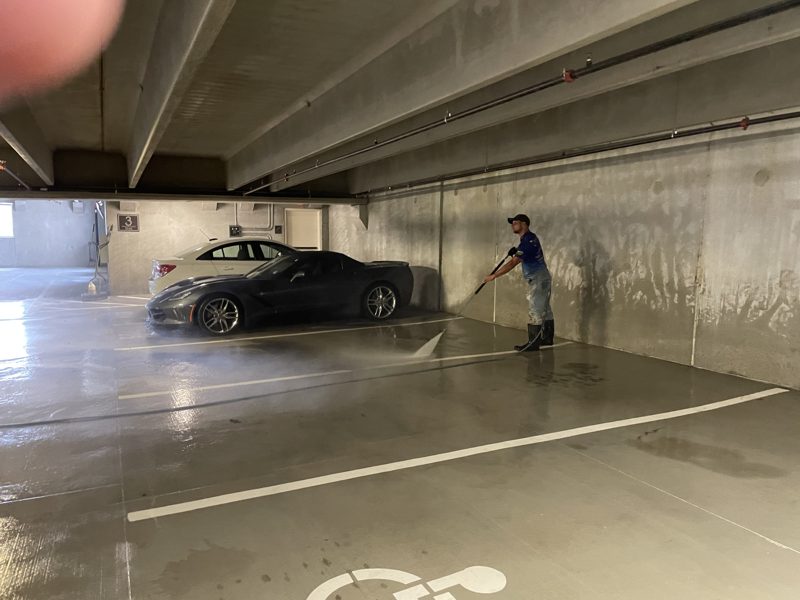
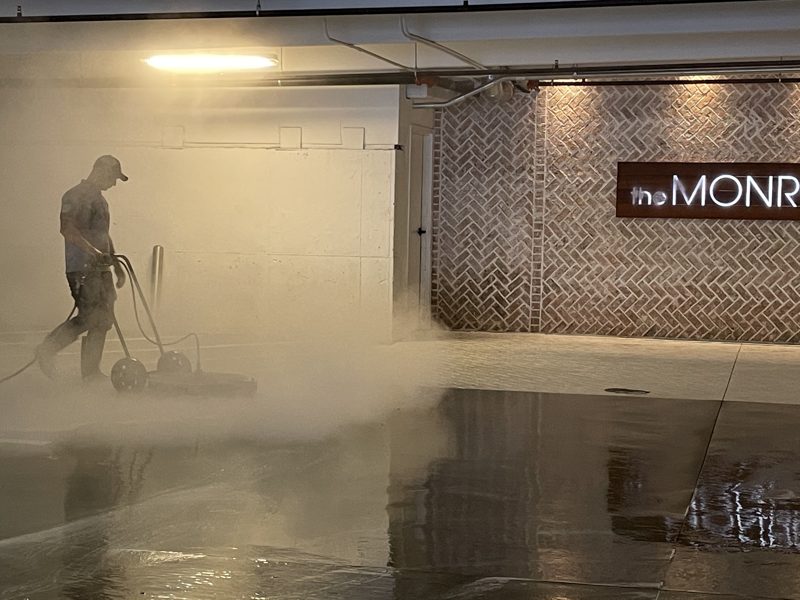
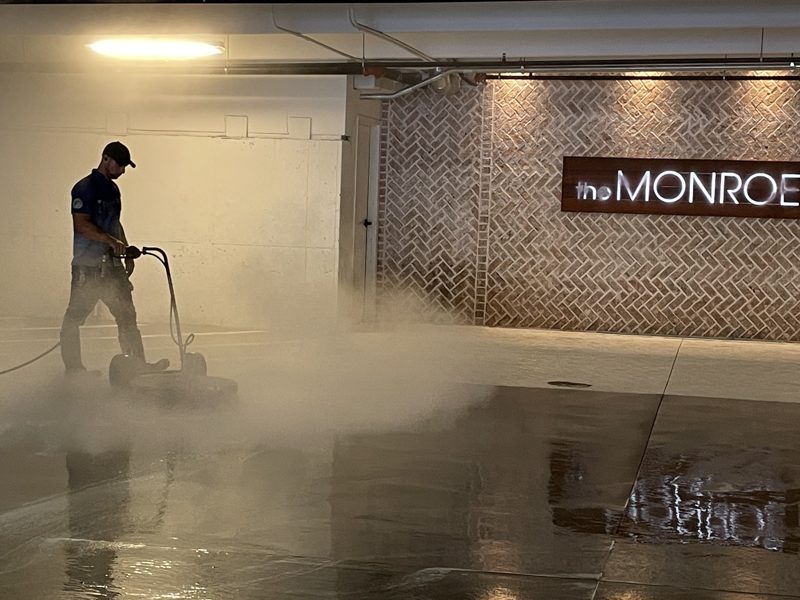
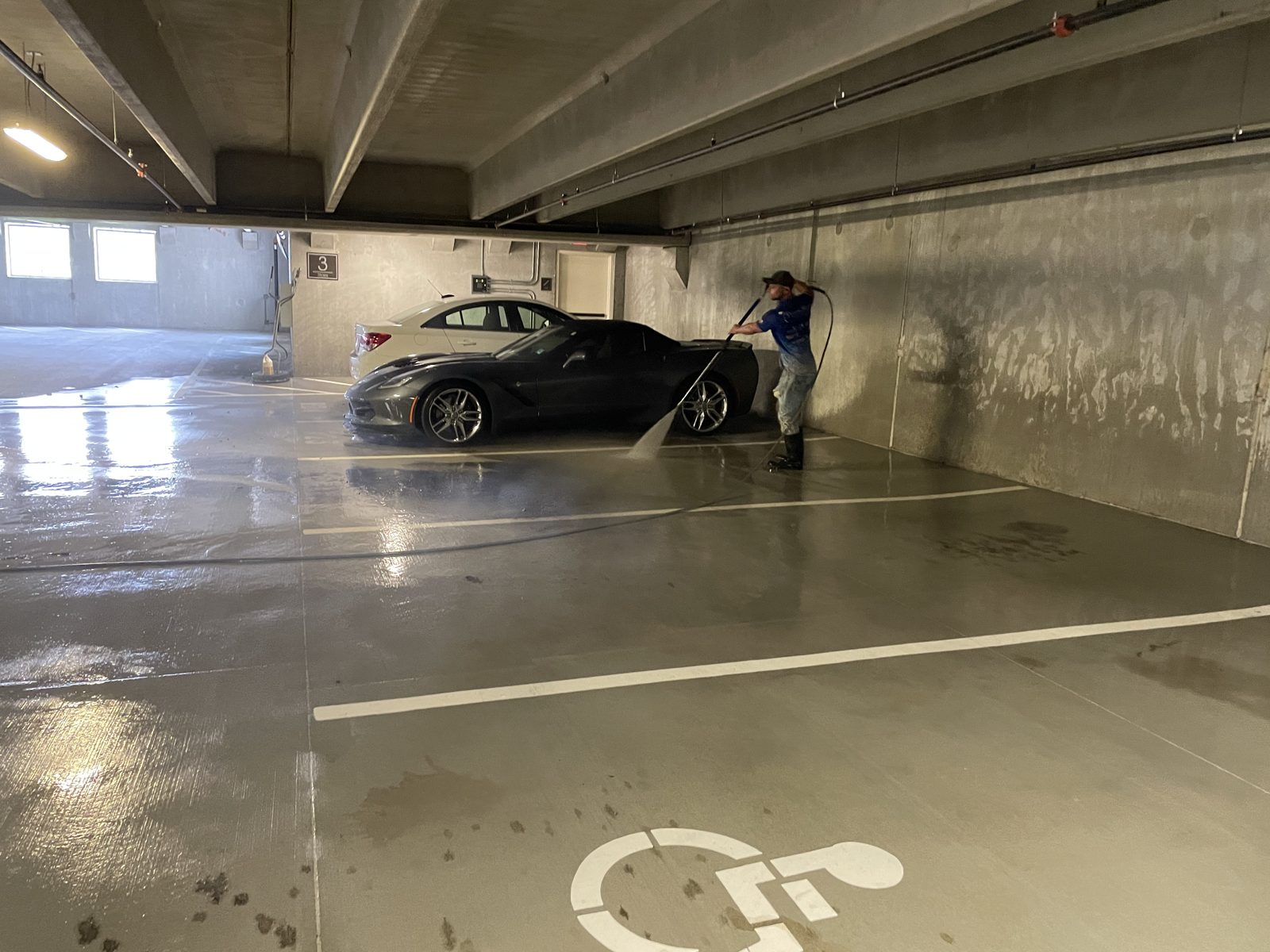
Four-level occupied deck, cleaned in sections over 4.5 days
How it runs
These are the controls we commit to on every project we accept. If a project will not carry them, we do not take it.
The transfer
Managed is not a description of effort. It is a statement about who carries the coordination risk, and it is worth being exact about what moves and what does not.
What moves to us: sequencing between trades, the schedule, quality acceptance at every handoff, and the single number you call. If a striping crew arrives before the sealer has cured, that is our failure and our cost to correct. It does not become a conversation between you and two firms who each believe the other one was wrong.
What does not move: your scope decisions and your budget authority. We do not approve changes on your behalf and we do not spend against a contingency you have not released. A manager who can quietly enlarge the job is not a manager, it is an open account.
That line matters most on the projects where it is tested. A trade firm walks off, a material lead time doubles, a slab comes up worse than the walk suggested. On a project you coordinate yourself, each of those becomes your problem to solve in the middle of your week. Under this model they become our problem to solve and your decision to make, which are two different things and should stay that way.
Money
Capital work goes wrong on billing about as often as it goes wrong on trades. The structure below is the one we use, and the specific terms are written into the contract rather than assumed.
Terms, retainage percentage and billing cycle are set in the executed contract. We do not publish them as though they were fixed, because they are negotiated per project.
Change control
It always moves. The question is whether it moves through a process or around one.
Most capital projects that overrun did not overrun on the original scope. They overran on the accumulation of small additions that nobody priced, each one reasonable on its own and none of them recorded until the final invoice made the total visible.
Our rule is simple and it costs us work sometimes. Nothing outside the written scope gets performed before it is scoped, priced and approved in writing. If that means a crew stands down for a day waiting for an answer, the crew stands down. A day of idle time is cheaper than an unbudgeted line you discover at closeout, and it is far cheaper than the argument about whether you asked for it.
The same rule runs in the other direction. If a line comes in under, that shows in the reconciliation and it goes back to you. A change order process that only ever moves the number upward is not a process.
If you have a contingency, we would rather know the number and not touch it than not know it and be suspected of spending it. Say what it is at the walk.
Straight answers
Both, and we say which before you sign. We self-perform concrete, striping, debris and hauling, property preservation, and commercial pressure washing. Painting, fencing and modular work are delivered by qualified trade firms under our management.
Either. The contract role is stated in every proposal. We do not describe ourselves as a general contractor on scopes that require a license we have not verified for that jurisdiction.
A deficiency goes in the log, correction rights in the trade firm agreement are exercised, and the remedy runs under your signed contract. We keep more than one qualified firm per trade so a failure does not stall the schedule.
Our projects typically run between $20,000 and $2,000,000, which is where the management model, the quality control and the closeout documentation pay for themselves. Below that we are still willing to carry all of the scopes, so book a site walk rather than assuming it is too small.
We do. You hold one contract with us, and we hold the agreements with the firms performing the work. That is the point of the model. If you would rather contract the trades directly and buy only the coordination, say so at the walk and we will price it that way instead, but it is a different arrangement and it changes who carries the risk.
License where the scope requires one, insurance, service area, capacity and references are on file before a firm is assigned to your project. You can ask to see that file for the firms on your job. Nobody works on a property under our name whose paperwork we have not read.
Then we run them. Bringing in a firm the property already trusts is normally easier than replacing it, and it removes the suspicion that the coordination layer exists to sell you our own subcontractors. They go through the same qualification file as anyone else.
Photographs against each line of the schedule of values, the change order record, warranty documentation from the trades that carry one, and the final reconciliation. It is assembled as the work runs rather than reconstructed afterward, which is why it arrives at closeout instead of six weeks later.
Yes, and most of what we run is occupied. It is slower and it takes more sequencing, and we price it that way honestly rather than quoting the vacant number and discovering the constraint on site.
Thrare Contracting takes multi scope capital work on multifamily and commercial property across metro Atlanta as a managed project. You hold one contract, we hold the agreements with the performing firms, and the coordination risk sits with us. Exterior improvement programs, turn and reset programs, site and material works, and occupied property works are the project types that fit this model.
As a schedule of values, so every line carries its own number and a line you can see is a line you can cut. Progress billing runs against lines that are actually finished with the supporting photographs attached to the invoice. Changes are scoped and priced in writing before work starts, and final accounting reconciles the schedule of values against everything billed, which on multi trade work is the step that catches double counting between scopes.
Yes, and most of what we run is occupied. It is slower, it needs more sequencing, and it is priced that way openly rather than quoting the vacant number and discovering the constraint on site. Occupied work is taken in sections with notice, and each section is handed back before the next begins.
It is our problem to solve and your decision to make, which are two different things. We hold the agreements with the performing firms, so replacing one is a management action rather than a renegotiation you have to run. Licensing, insurance, capacity and references are on file before any firm is assigned, and you can ask to see that file for the firms on your project.
The work
A four level deck degreased over 4.5 days while residents kept parking on it. Sequencing is what made that possible, not equipment.


The same deck across levels. Each section was handed back before the next began.
The seam
Both rows contain the same five scopes. The difference is who owns the space between them.
The trades are rarely the problem. Bought separately, five scopes overlap, collide and leave gaps. Sequenced as one project, the same five have defined handoffs, and somebody owns each one.
About this page
Page maintained by Thrare Contracting, a trading name of Rare Earth Ltd, 8735 Dunwoody Pl, Ste R (#6), Atlanta, GA 30350. DBE and ACDBE certified through the Georgia Unified Certification Program and MBE certified. HUBZone and 8(a) are not held and are not represented as held. Insurance, certification numbers and what is and is not carried are set out in full on credentials and compliance.
Tell us the property, the scopes, the timing, and the role you need us in. If it fits, we walk the property and come back with a written scope, a schedule and a number, at no cost to you for the walk. If it does not fit, we will tell you that instead of quoting it.
We aim to reply to every submission within one business day, from a person. Prefer to talk first? Call 678-748-3578.