Our Work
Services in action
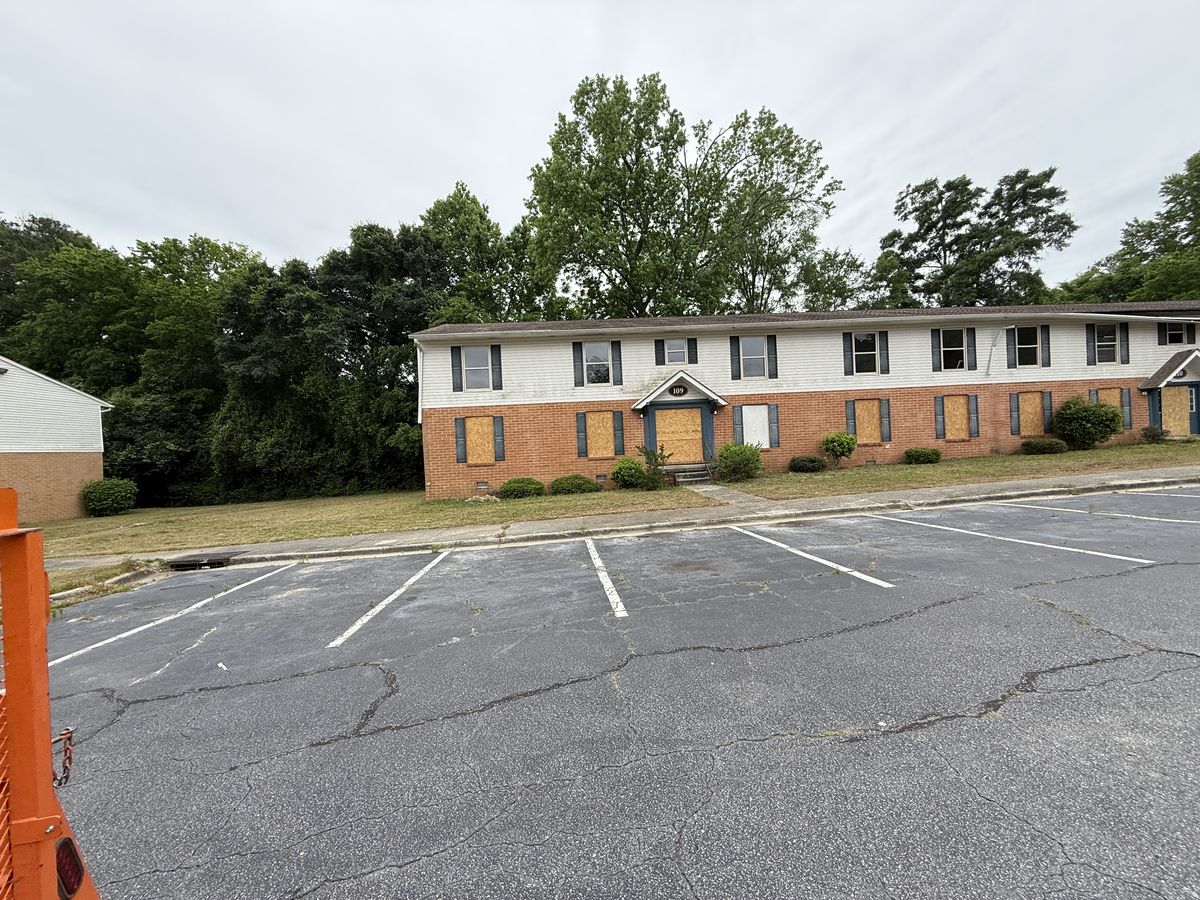
Board-Up & Securing

Lock Changes
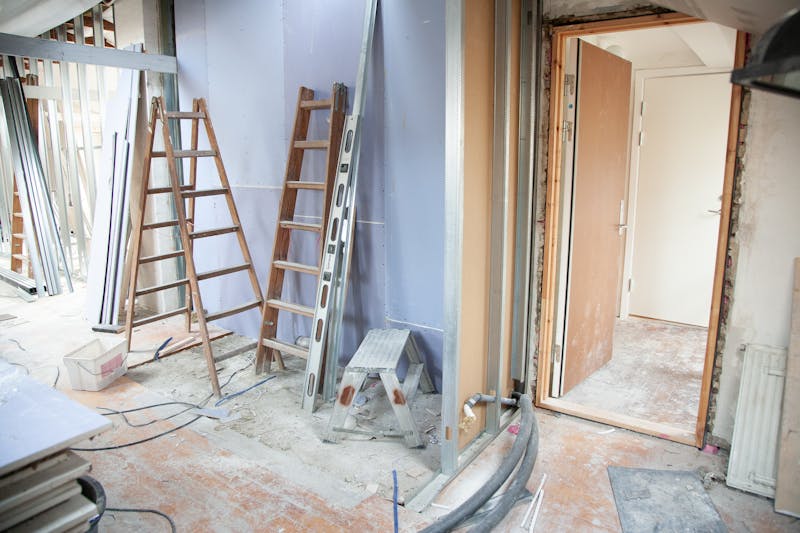
Cleanouts & Debris Removal

Winterization

Grounds Maintenance
Board-ups, lock changes, cleanouts, winterization, and grounds maintenance across metro Atlanta. Fast turnarounds. Photo documentation on every order.
We cover vacant and foreclosed property maintenance. Every service includes timestamped before/after photos and completion reports.
Windows, doors, and access points secured with plywood or polycarbonate per HUD/FHA specs. Emergency board-ups available same day. We carry standard sizes on every truck.
Kwikset and Schlage lock changes on all entry points. Lockbox installation. Key codes reported to servicer within 24 hours of completion.
Full interior and exterior cleanouts. Personal property removal, broom-swept condition, hauling to licensed disposal facilities. We handle everything from single rooms to whole-house trash-outs.
Dry or wet winterization of plumbing systems. Water heater draining, toilet antifreeze, pipe labeling, and furnace checks. Keeps pipes from bursting.
Initial cuts on overgrown properties, ongoing bi-weekly or monthly mowing, edging, trimming, and weed control. We keep it mowed so the neighbors stop calling the city.
Exterior and interior property condition inspections with photo reports. Occupancy verification, condition updates, and damage assessments delivered same day.
We follow the same process on every order so nothing gets missed and your reports are always clean.
We accept orders via email, portal, or phone. Work orders are acknowledged the same business day and scheduled from there.
Crew arrives on-site, takes timestamped before photos of all areas, documents any pre-existing damage or hazards.
Services performed per HUD/investor guidelines. After photos taken of all completed work from matching angles.
Photo report and invoice delivered same day. Uploaded to your portal or emailed directly - however you want it.
We cover the full metro Atlanta area and can handle work orders up to 60 miles out. Call to confirm coverage for your property.
Federal HUD/FHA inspection rules set one clock for a property securing an insured mortgage. The City of Atlanta, Fulton County, DeKalb County, and the State of Georgia each run a second one, and it is not the same clock.
Every owner of a vacant residential building or dwelling inside the Atlanta city limits must file a vacant property registration with the Atlanta Police Department Code Enforcement Section within 30 days of the property becoming vacant, or 90 days after acquiring ownership, whichever is later. The fee is $100.00 per building, the registration stays valid for 12 months, and the named agent or owner of record has to carry a Georgia address (ATL311 Knowledge Article KB0013034, Code Enforcement - Vacant Property Registration Process, read 2026-09-02).
DeKalb County Code Compliance runs two separate registries rather than one: a Vacant Property Registry filing due within 90 days of vacancy, and a Foreclosure Property Registry filing due within 120 days of foreclosure, each carrying a $100 fee and fines of up to $1,000 per violation for non-compliance. A property that is both vacant and foreclosed, which describes most of what a servicer sends us, has to register with both (DeKalb County Code Compliance, Vacant and Foreclosure Registry, read 2026-09-02).
Unincorporated Fulton County does not run a fee-based registry for vacant structures; it enforces through a written notice of violation and a stated compliance deadline, then a citation in Municipal Court once that deadline passes unmet (Fulton County Government, Public Safety Code Enforcement, read 2026-09-02). Under Georgia law, the deed under power from a foreclosure sale carries its own filing clock: it must reach the county's superior court clerk within 90 days of the sale, and a filing that runs past 120 days draws a $500.00 late penalty (O.C.G.A. § 44-14-160, Justia Law, read 2026-09-02). That deed filing deadline is usually the point a servicer's ownership of an Atlanta-area property becomes a matter of public record, and it lands close enough to the county registration deadlines above that the two are worth tracking on one calendar rather than two.
An address inside Atlanta city limits, one in unincorporated Fulton or DeKalb, and one inside a Gwinnett or Cobb HOA are the same securing job routed through different offices, not the same job everywhere.
Atlanta's own Code Enforcement Section sits inside the Atlanta Police Department; unincorporated Fulton County runs its complaint line through the County Police Department at 404-612-2691; and DeKalb County Code Compliance is a separate department headquartered at 180 Sams Street in Decatur. Each keeps its own registry, its own case numbering, and its own phone line, so a portfolio spread across the metro is coordinating with several offices rather than one, before any of the cities that ring the two counties are counted separately (ATL311 Knowledge Article KB0013034; Fulton County Government, Public Safety Code Enforcement; DeKalb County Code Compliance; all read 2026-09-02).
An HOA in Gwinnett or Cobb will chase an owner over grass height long before any county code office opens a file, which is a private-contract pressure rather than a government one, and it tends to move faster than either.
Freeze risk here runs on its own calendar. At Hartsfield-Jackson International Airport, the average first freeze date is November 13 and the average last freeze date is March 20, a roughly four month window that has, on record, opened as early as October 11 and as late as December 18 for the first freeze alone (NOAA National Weather Service, Atlanta/Peachtree City Forecast Office, read 2026-09-02). Outside that window a frozen-line loss on a vacant property is unlikely enough that standing full winterization is often money spent guarding against a risk that has already passed for the season; inside it, an unwatched supply line is exactly the failure a monthly visit exists to catch.
None of the registration fees described above are large on their own. What gets expensive is a portfolio where nobody owns the filing, and the fine notice reaches the mortgage file before anyone reaches the parcel.
A single Atlanta or DeKalb registration is a $100 line item. A DeKalb fine for non-compliance runs up to $1,000 per violation under the county's Vacant Property Registration Process (DeKalb County Code Compliance, read 2026-09-02), and it is charged per violation rather than per property, so one visit that turns up two separate violations is two fines. An Atlanta registration also renews annually at $100 per parcel, and letting it lapse during a long hold restarts the same 30 and 90 day clocks described above (ATL311 Knowledge Article KB0013034; DeKalb County Code Compliance, Vacant and Foreclosure Registry; both read 2026-09-02).
We do not file the registration on a servicer's behalf. The registrant of record has to be the owner or a Georgia-based agent named on the parcel, not the preservation vendor. What we build into the completion report is the registration number and status whenever one is already on file, so the paperwork trail we generate lines up with the paperwork trail the county is already holding, rather than starting the reviewer from nothing.
Every local filing deadline, fee and fine above is quoted from the city, county or state source that issues it, not summarized from memory, so you can check it.
City of Atlanta vacant property registration: ATL311 Knowledge Article KB0013034, Code Enforcement - Vacant Property Registration Process. Read 2026-09-02.
DeKalb County vacant and foreclosure registries: DeKalb County Government, Vacant and Foreclosure Registry. Read 2026-09-02.
Unincorporated Fulton County code enforcement: Fulton County Government, Public Safety Code Enforcement. Read 2026-09-02.
Foreclosure deed filing deadline: O.C.G.A. § 44-14-160, Filing of foreclosure and deed under power, via Justia Law. Read 2026-09-02.
Freeze dates for Atlanta: NOAA National Weather Service, Atlanta/Peachtree City Forecast Office, Earliest Last Freeze for Atlanta Since 1945 and Earliest, Latest and Average First Freeze Dates for North and Central Georgia. Read 2026-09-02.
Certifications: Rare Earth Ltd holds active Disadvantaged Business Enterprise certification through the Georgia Unified Certification Program and Minority Business Enterprise certification, is registered in SAM.gov under CAGE code 9JAV8 and UEI Z4WKS4UE8NJ6, and is enrolled in E-Verify. It does not hold HUBZone, 8(a) or SOC 2 status, and none is represented here.
The list is close to the same shape everywhere we work. What is different here is the extra line: the local filing status.
The work order itself, with its scope and allowable spelled out. The investor or client specification, or at minimum the name of it. Where to get in, including gate codes and HOA or property manager contacts, since an HOA board will chase an owner over grass height long before any county code office opens a file. And, where one exists, the City of Atlanta or DeKalb County vacant property or foreclosure registration number already on file for the parcel, so we are not re-confirming a filing status your file already has.
Tell us where the report needs to land and in what format before the first visit, not after a rejected upload. And give us a name who can say yes to an over-allowable bid without a multi-day chain, since remobilizing a crew back out to a metro Atlanta address almost always costs more than the wait for that approval would have.
A completion report here has to satisfy an investor file and, on a registered parcel, potentially a county code officer asking whether the property is being kept up. Building it for both from the first visit is cheaper than redoing it for the second reader later.
Shots are dated and framed from a fixed spot every visit: on arrival, mid-job if the sequence matters, and again on completion from that same spot, so two images sit side by side instead of needing an interpreter. If a City of Atlanta, Fulton County or DeKalb County officer ever opens a case on a parcel in our care, that same set, tied to the visit date and, where one exists, the registration number, is the record showing the property was not left unattended between visits.
Where a scope could not be finished, the reason gets an image and a note rather than a note alone, because a written assumption is not the same thing as a photograph. Georgia does not require this level of detail on a residential vacant filing itself; we hold ourselves to it because a servicer's review and a county's file request end up asking the same underlying question, and one photo set should be able to answer both.
Tell us about your needs and we'll get back to you within 2 business hours on weekdays. We work with banks, servicers, asset managers, and REO companies.
Board-ups, lock changes, cleanouts and trash-outs, winterization, debris removal, and occupancy inspections, documented with photos on every unit.
We can typically deploy within 48 hours anywhere in Georgia. Documented past performance includes securing 54 units across two properties in 72 hours for Prescott Construction.
Banks, REITs, housing authorities, property preservation networks, general contractors, and property managers.
Yes, date-stamped photo documentation before and after, per unit, suitable for lender and insurer files.
All of Georgia for preservation work, with multi-property portfolio coverage across the Southeast.
Yes, send the specification or name it and we scope to that standard rather than a generic one. On an asset that also carries a City of Atlanta or DeKalb County vacant property filing, we work to whichever requirement sets the higher bar, and we ask for the allowable in writing before an over-allowable item becomes a dispute.
The crew leaves without entering and documents why: photographs of whatever showed occupancy, logged the same day. Walking into an occupied unit creates real legal exposure for both the servicer and us, not a completed work order, so a confirmed-occupied finding counts as a valid outcome of the visit rather than something still owed to you.
It is usually the cheapest way to keep an asset from reading as abandoned, because an unmowed lot draws the same code complaint whether the county calls it a vacant structure violation or a nuisance violation. We run grounds visits tighter through the growing season and hold a normal interval the rest of the year, timed against the freeze window described in the Local Reality section above rather than a fixed calendar.
No. Registration has to be filed by the owner or by a Georgia-based agent of record, not by the preservation vendor. What we provide is the registration number and status in the completion report whenever one has already been filed, so your file and the county's registry line up.