Residents notice when the property looks bad. We keep it looking right.
Unit turns, common-area cleaning, exterior pressure washing, trash-outs, and grounds maintenance for multifamily properties across metro Atlanta. One crew handles it all. One invoice at the end.
4.9 stars on ThumbtackInsured, GL certificate on requestDBE/MBE certifiedSame-week scheduling
First Unit Turn Free
We'll clean your next vacant unit - full turnover clean, no charge - so you can see the quality before you commit to a contract. No strings. If you don't like the work, you owe nothing.
Limited to one unit per property. Standard unit turn scope: deep clean, appliance wipe-down, bathroom sanitization, floor cleaning, window tracks, light fixture dusting. Metro Atlanta only.
Sound Familiar?
What's actually losing you tenants.
Most properties are calling three vendors for one job.
Vacant units sitting too long
Every day a unit sits empty is lost rent. You need it turned fast, cleaned right, and ready to show - not "we'll get to it next week."
We turn units in 24-48 hours.
Common areas look tired
Stained walkways, dirty breezeways, grimy pool decks. Residents notice. Prospects notice more. It costs you renewals and leases.
Monthly exterior cleaning plans available.
Abandoned unit trash-outs
Tenant skipped out and left everything behind. You need the unit gutted, cleaned, and rent-ready. Not in two weeks - now.
Same-week trash-outs with photo documentation.
Too many vendors to manage
One crew for cleaning, another for pressure washing, another for grounds. Three invoices, three phone calls, three chances for no-shows.
One vendor. One invoice. One point of contact.
What We Handle
Multifamily maintenance services
Everything your property needs between the leasing office and the curb. We show up when we say we will.
Unit Turn Cleaning
Full deep clean on vacant units. Kitchens, bathrooms, floors, windows, appliances, baseboards. Move-in ready in 24-48 hours. Before/after photos on every unit.
Common-Area Pressure Washing
Walkways, breezeways, stairwells, pool decks, parking garages, dumpster pads. We clean the areas your residents and prospects see every day.
Exterior Building Washing
Soft wash for siding, stucco, and painted surfaces. High-pressure for concrete, brick, and stone. Different surfaces need different methods. We know which.
Trash-Out & Cleanout
Full unit cleanouts when tenants leave everything behind. Furniture, appliances, personal property, debris - hauled and disposed at licensed facilities. Broom-swept condition.
Grounds Maintenance
Mowing, edging, trimming, leaf removal, and seasonal cleanup. Weekly or bi-weekly schedules. We keep your curb appeal up and your code violations at zero.
Make-Ready Repairs
Minor drywall patches, paint touch-ups, caulking, fixture replacements, and hardware swaps. The small stuff that makes a unit show-ready instead of just clean.
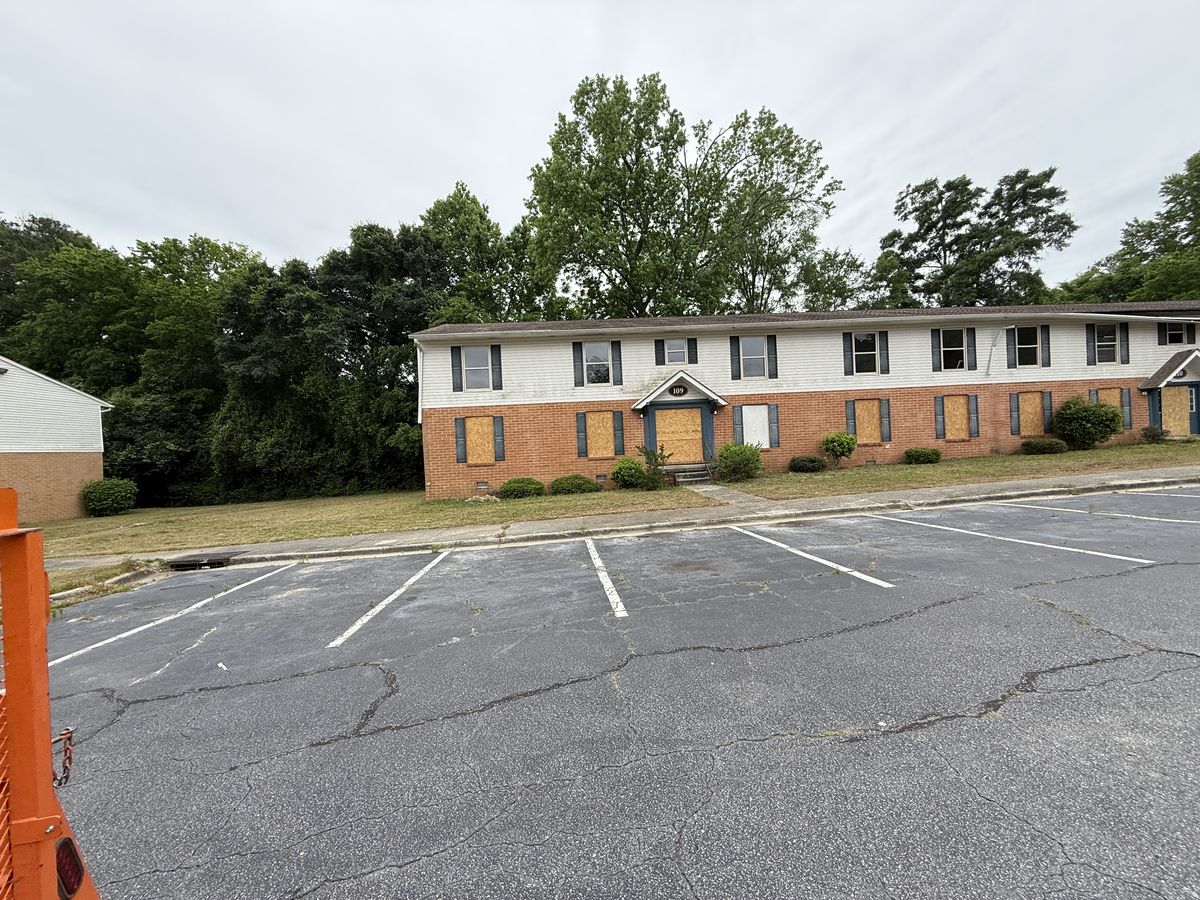
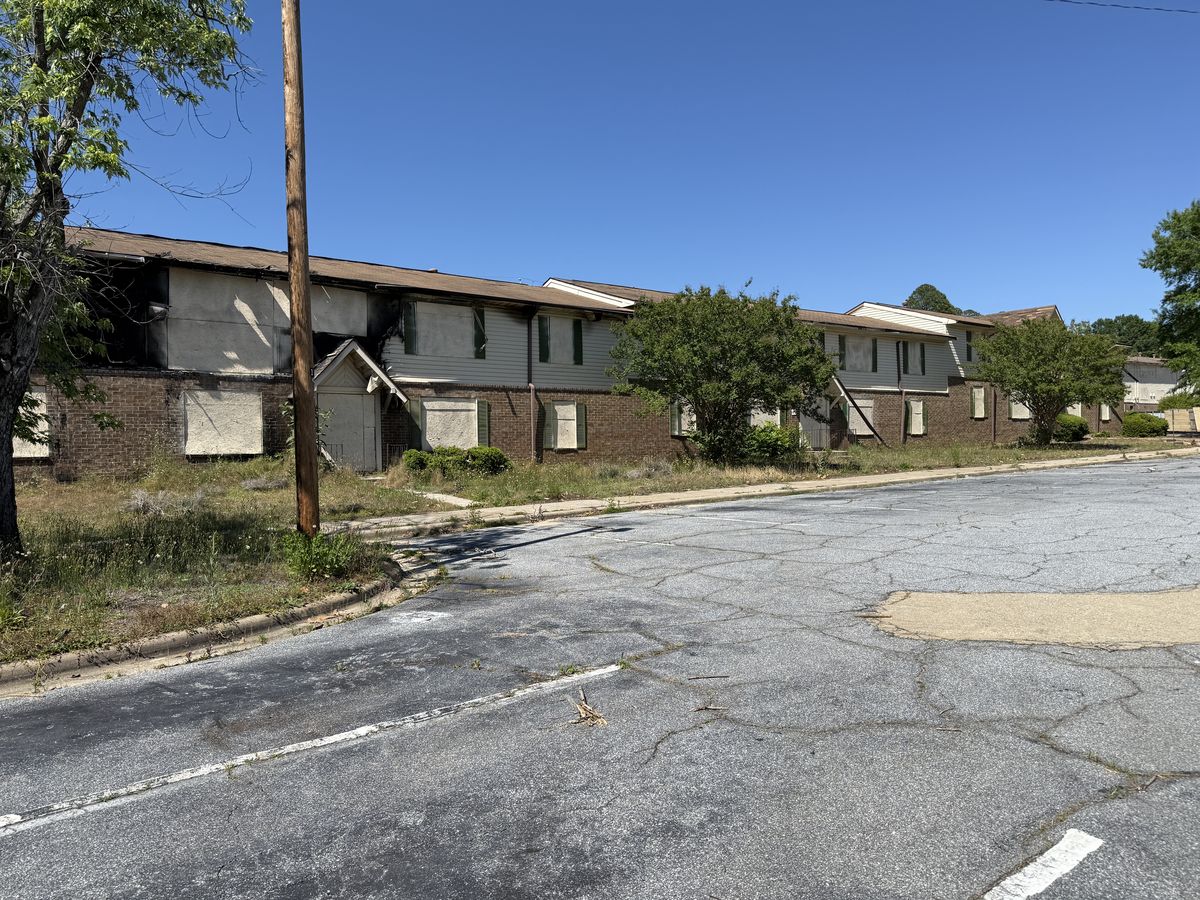
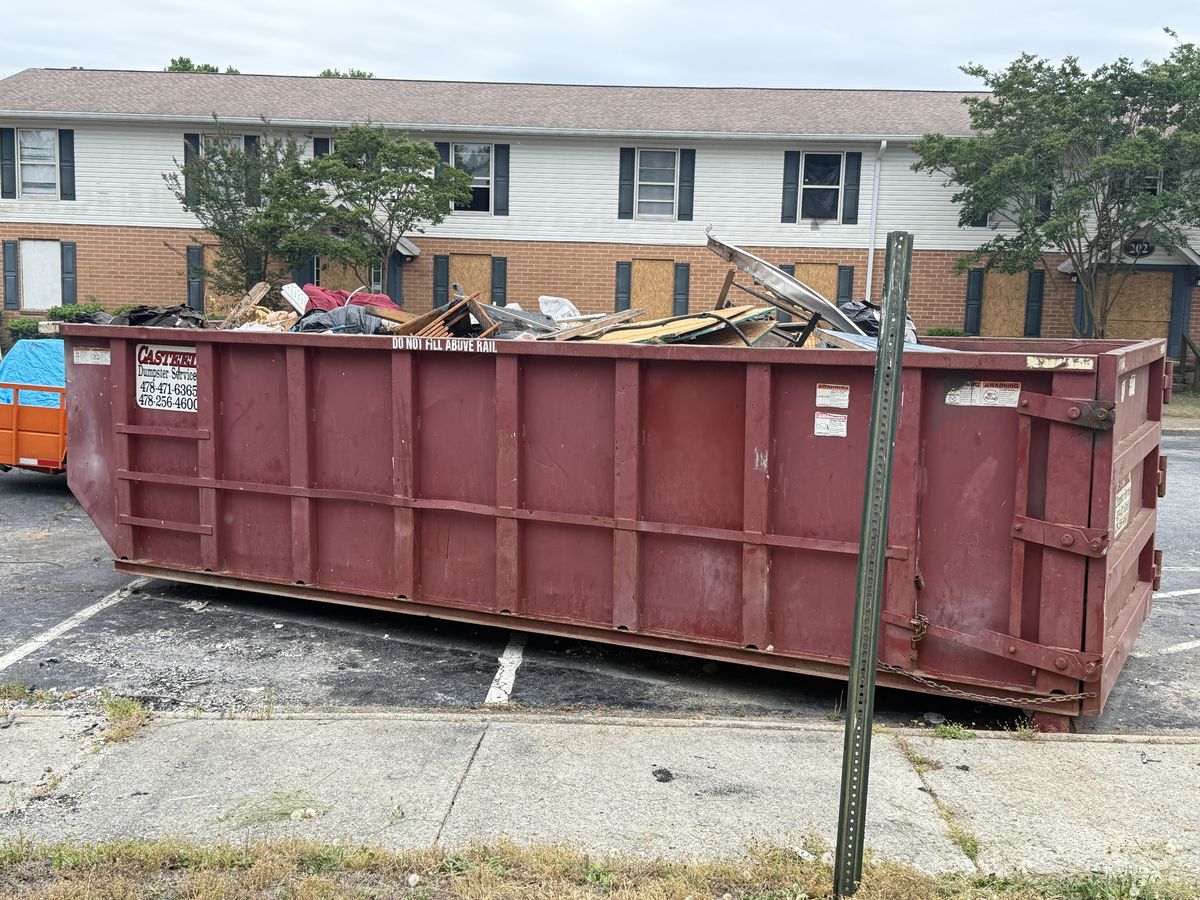
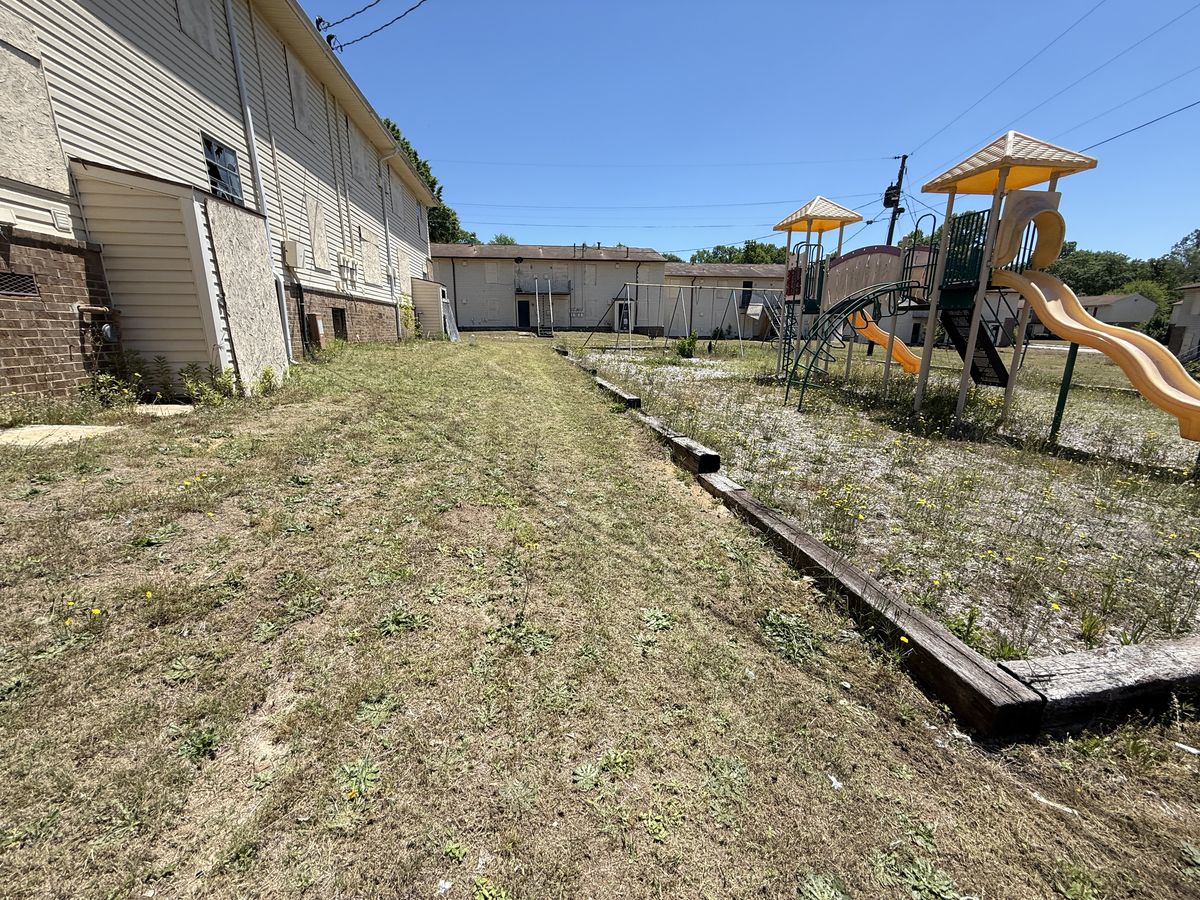
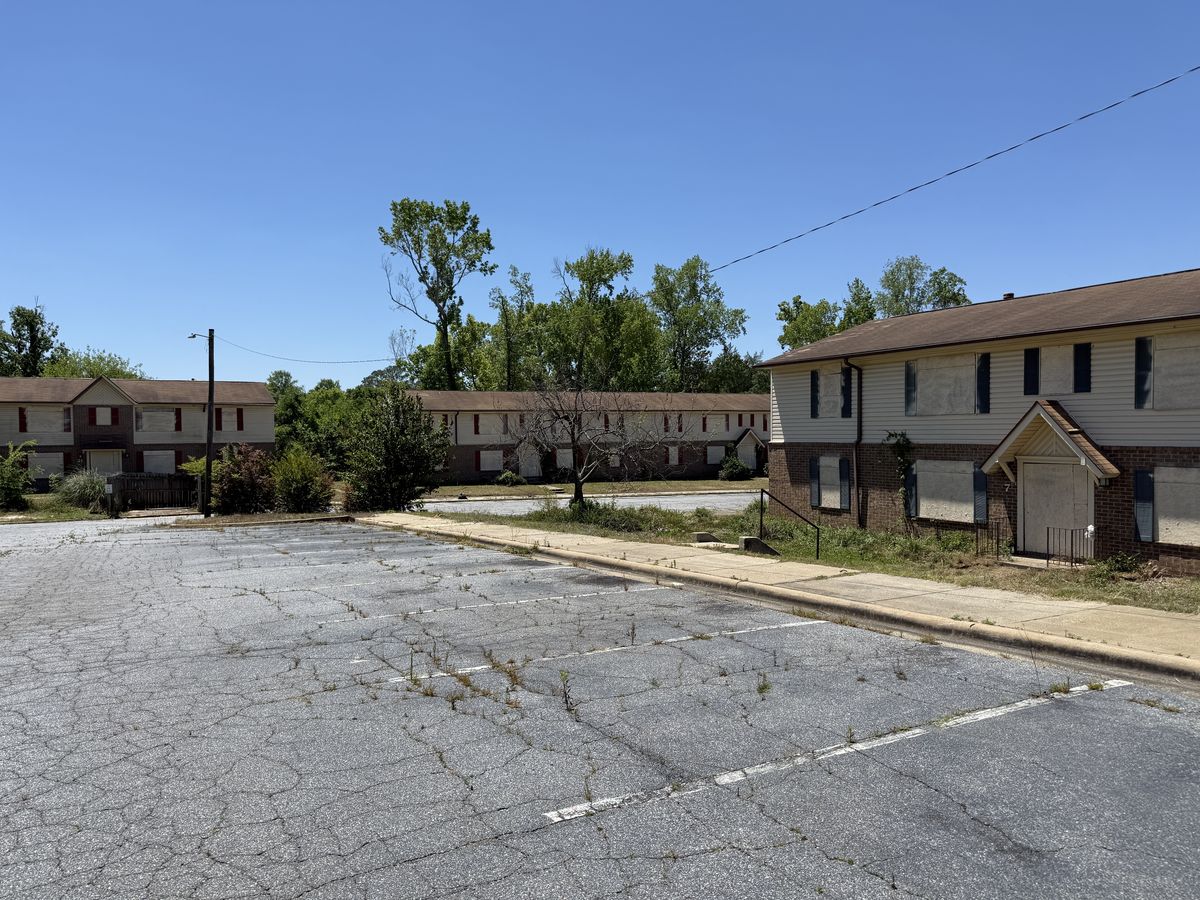
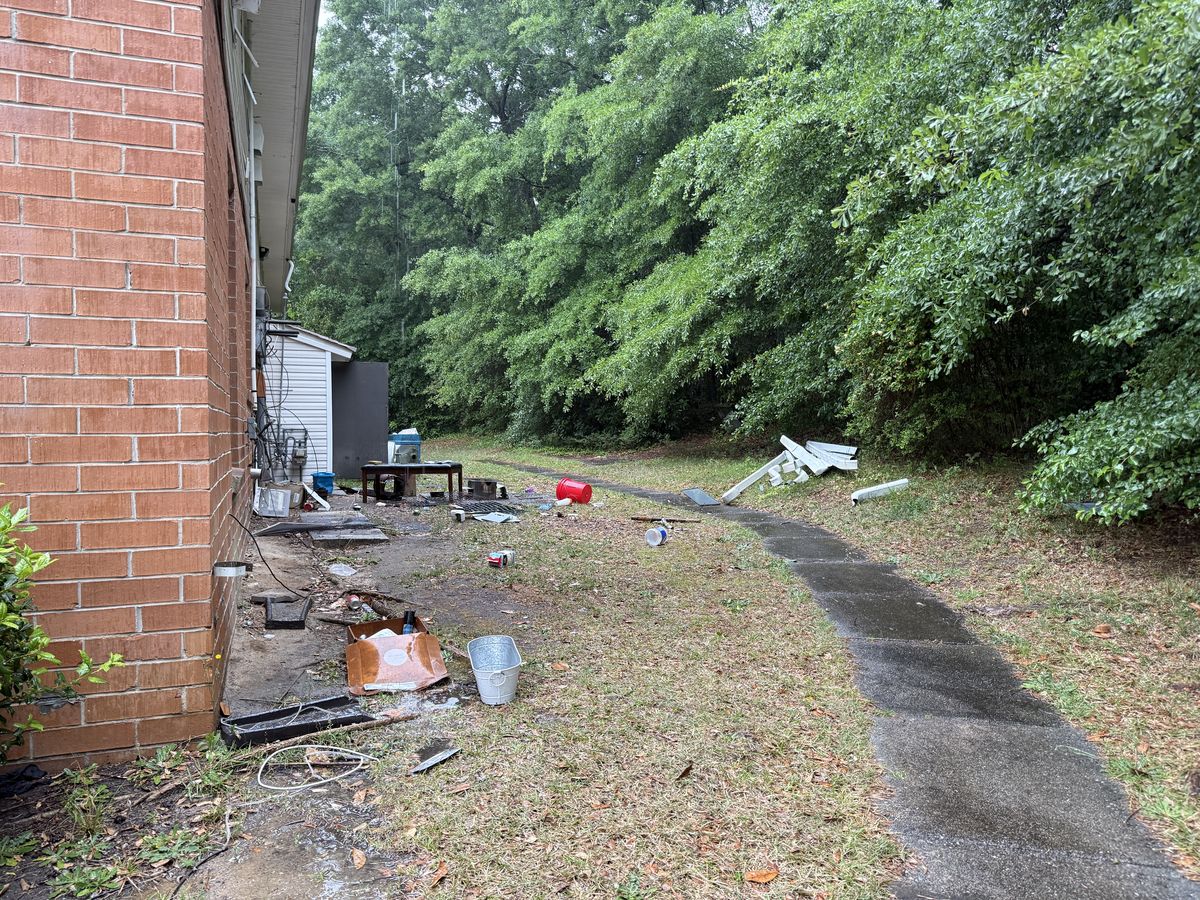
Prescott Construction needed two multifamily complexes in Macon and Columbus secured, cleaned out, and maintained. We deployed crews across both properties. Board-ups on every unit, full debris removal with roll-off dumpsters, and grounds maintenance on overgrown lots. Photo documentation delivered same day.
54Units
72Hours
100%Photo Doc
This is what it looks like when you need a crew that shows up, handles all of it, and documents everything. 5 units or 50, we hit the deadline.
What does apartment turnover actually cost a 200 unit community?
The National Apartment Association puts the answer above $168,000 a year, and most of that money never arrives as a vendor invoice.
According to the National Apartment Association, the turnover rate across apartment rentals averaged 46.8 percent, the average cost of a single move-out is conservatively calculated at $1,800, and for a 200 unit community those two figures total more than $168,000 in annual turnover expense. NAA published that guidance on 2025-03-06 and drew the rate from NAA's 2019 Survey of Operating Income and Expenses in Rental Housing Communities. Read 46.8 percent as NAA's 2019 survey figure rather than as a current-year rate for your own portfolio.
The NAA duration figure matters more to a schedule than the cost figure does. NAA states that many companies use seven working days as an average guideline to turn a unit, while management groups frequently expect five, and at times three. The gap between a 5 day expectation and a 7 day guideline is two days of vacancy per unit, and on a unit renting at $1,500 a month two days is roughly $100 that no renegotiation of a paint rate ever recovers.
Turnover expense and vacancy loss sit in different lines of the same operating statement, which is why coordination is under-managed relative to what coordination costs. A manager reviewing turn spend sees the invoices. Nobody invoices for the four days a unit sat waiting on a second vendor to arrive.
Billed and visible: vendor labor, materials, equipment and disposal, the only part of a turn that arrives as an invoice.
Real and invisible: vacancy loss for every day the unit is not rentable, recorded in a different line from turnover expense.
Real and unrecorded: manager hours spent scheduling, chasing, re-inspecting and explaining, recorded in no line at all.
Sequencing
Why does a five day turn become a nine day turn?
A turn that uses four vendors is not four invoices. A turn that uses four vendors is four schedules that have to agree, and the schedule is what slips.
The standard sequence runs trash-out, clean, paint, repairs, then a final clean, and every handoff between those five steps is a place where a day disappears. The painter arrives before the trash-out finished. The flooring installer arrives after the paint and before the touch-up. No single vendor is late by much, and the unit reaches rent-ready on day nine instead of day five.
Those lost days are invisible in the accounting because no vendor billed for them. Thrare Contracting runs the whole sequence with one crew so the handoffs are removed rather than shortened, which is the mechanism that makes a turn finish sooner. No individual task is being performed faster.
A written turn standard is what makes the result repeatable across a portfolio. "Clean" has to mean the same thing in March and in August and to whoever is on site that week, and most disputes about turn quality are really disputes about a standard nobody wrote down. Thrare Contracting writes the standard once per portfolio, prices it once, and photographs each unit against it at handoff.
Occupied Property
How does exterior work get done while residents are living there?
Occupied exterior work is sequenced in sections with posted notice and handed back as the crew moves, so no resident has to ask where to park or how to reach a door.
Breezeways, stairwells, mail areas and the first few feet either side of every entry carry the impression of the whole community and soil faster than any other surface, because every resident walks that ground twice a day. Dumpster pads run on use and on odor, and a Georgia summer moves that clock faster than the schedule most properties inherited from a previous manager.
Building elevations move on a slower cycle and move unevenly. North-facing and shaded elevations hold moisture and grow algae faster than sun-exposed ones, so on a single building the shaded side can need twice the frequency of the front. A unit count cannot show that. A walk of the property can, which is why Thrare Contracting would rather walk a site than quote from a rent roll.
Scheduling around residents costs time and gets planned that way from the start. Notice goes up before the crew arrives, parking rows are cleared in the order the crew will reach them, and each section is returned to use the same day rather than at the end of the week.
Wash Water
Where does wash water from an apartment property legally go?
Wash water from exterior cleaning is a non-stormwater discharge, and the compliance path at an apartment property is containment rather than a permit.
EPA's NPDES stormwater program treats wash water from exterior surfaces as a non-stormwater discharge that must not enter a municipal separate storm sewer system unless an NPDES permit authorizes the discharge. 40 CFR 122.26(b)(2) defines an illicit discharge as "any discharge to a municipal separate storm sewer that is not composed entirely of storm water except discharges pursuant to a NPDES permit (other than the NPDES permit for discharges from the municipal separate storm sewer) and discharges resulting from fire fighting activities." Wash water running off a breezeway carries sediment, oil and grease, and detergent, so wash water is not composed entirely of storm water and the definition reaches it.
The consequence for a property manager is short. No discharge to a storm drain and no discharge to surface water means the permit question never opens, so containment is a crew method rather than a paperwork exercise. Thrare Contracting blocks or mats the downstream inlet before the first trigger is pulled, directs flow to a vegetated or landscaped area where the site allows it, and recovers water on hardscape that drains straight to a grate.
40 CFR 122.26(d)(2)(iv)(B) requires an MS4 permit application to describe "a program, including a schedule, to detect and remove (or require the discharger to the municipal separate storm sewer to obtain a separate NPDES permit for) illicit discharges and improper disposal into the storm sewer." That requirement is why a municipal inspector has both a reason and an obligation to look, and why a finding tends to land on the property owner rather than on the crew that already left the site.
Trade bodies state the same rule in their own words. According to the Brick Industry Association, "Some jurisdictions may require containment and treatment of the runoff water before it can leave the site. Dilution of runoff and its release into the stormwater management system should not be expected or allowed unless expressly permitted by the applicable jurisdiction."
Thrare Contracting publishes no penalty figure on this page. Clean Water Act civil penalties are statutory, adjusted for inflation, and depend on the enforcement route taken, and the per-day dollar figure repeated across the pressure washing trade web traces to secondary sources rather than to the statute. A vendor quoting a scare number at you has not read the rule.
Jurisdiction
Which jurisdiction governs your property, the city or the county?
An apartment address inside an incorporated city is governed by that city's ordinance, and a county stormwater document is the wrong paper to hand a board or an inspector.
Fulton County Government states the boundary in its own words: "The purpose of the Stormwater Management Program is to manage the surface water resources of unincorporated Fulton County, including administration, maintenance, operations, regulation, and enforcement. For all other areas of the County, stormwater management is the responsibility of the individual cities." A property in Sandy Springs, Roswell, Alpharetta or the City of Atlanta therefore answers to a city program, not to the county one.
Inside Atlanta, the Atlanta Code of Ordinances article on illicit discharge and illegal connections applies, at section 74-429, "throughout the corporate limits of the City of Atlanta." Section 74-436 states that "No person shall throw, drain, or otherwise discharge, cause, or allow others under its control to throw, drain, or otherwise discharge into the storm sewer system of the City of Atlanta any pollutants or waters containing any pollutants, other than stormwater." The Atlanta definition of a pollutant names detergents, "biodegradable or otherwise", alongside cleaning chemicals and yard wastes, and the exemption list at section 74-437 covers irrigation, air conditioning condensation, footing drains, springs and firefighting flows without reaching exterior rinse water. The Code of Ordinances text used here is current through Supplement 107, Update 1.
In Sandy Springs the City runs its own permitted system. The City of Sandy Springs Stormwater Management Program filing under MS4 permit GAG610000 records 636 MS4 outfalls, commits the City to screening approximately 20 percent of them per year so that 100 percent are screened across a five-year period, sets a goal of investigating illicit discharge complaints within 3 business days, and states that the City "has adopted the Metropolitan North Georgia Water Planning District's (MNGWPD) Model Illicit Discharge and Illegal Connection Ordinance."
In Cobb County the county ordinance reaches unincorporated ground only. Section 50-181 of the Official Code of Cobb County defines the county separate storm drainage system as a conveyance "Owned or maintained by unincorporated Cobb County", and section 50-191(a) makes it unlawful to discharge into that system "any matter of any nature excepting only such stormwater or surface water as authorized in this article." A property inside the Marietta city limits is served by Marietta's own system under Marietta's own ordinance, so the Cobb code is not the authority at a Marietta address.
Above all of those sits a planning body rather than a permitting one. According to the Metropolitan North Georgia Water Planning District, the District "collaborates with 97 cities and 15 counties", was established by the Georgia legislature in 2001, and its Resources Management Plan requirements "are enforced by the Georgia Environmental Protection Division." The District issues nothing to a contractor, so a vendor claiming a District permit is describing something that does not exist.
Incorporated address: the city's own illicit discharge ordinance governs, and the city's stormwater staff investigate.
Unincorporated address: the county ordinance governs, and the county program investigates.
Either way: the containment method on site is identical, and only the authority behind the finding changes.
Substrate Limits
What pressure is safe for brick, fiber cement siding and EIFS?
Three cladding types common in metro Atlanta multifamily stock carry three different published ceilings, and each ceiling comes from the body that makes or represents that material.
According to the Brick Industry Association, "Do not use water pressures higher than 400 psi (2800 kPa) as measured at the nozzle tip unless permitted by brick manufacturer", using a "stainless steel 25 to 50 deg. fan tip, held a minimum of 12 in. (305 mm) from the brick surface", after a trial cleaning on a sample area of 20 square feet allowed to dry before the result is judged. The Brick Industry Association also states plainly that "High-pressure water cleaning is not appropriate for brick and may damage the brickwork."
According to James Hardie Technical Bulletin #20, wide fan tips "kept a minimum of 6 feet from the wall and at pressures under 1500 psi will minimize the chance of damaging the siding", while sand blasting and acid washing "can damage the fiber cement surface" and are not recommended. The same bulletin adds that damage arising from improper cleaning or maintenance falls outside the James Hardie warranty, which is the sentence a manager wants in hand before a crew touches a newer garden-style building.
According to Sto Corp., an EIFS wall washed above 500 psi is at risk because "the EIFS surface integrity can be destroyed with higher pressure washing", and Sto sets a working range of approximately 200 to 500 psi with the nozzle several feet from the surface. Sika's Senergy technical bulletin sets the same ceiling from the other direction: "Never use water pressure more than 500 psi or allow pressure nozzles to come within 2 feet of the wall", and "The chemicals provide the cleaning, not the water pressure." Sto also warns that steam and high temperature methods exceed the roughly 165 degrees Fahrenheit service limit of the EPS insulation board behind the finish.
Three cautions belong with those numbers. Each figure is published for one material by one body, so a brick limit never transfers to fiber cement and an EIFS limit never transfers to brick. James Hardie and Sto Corp. publish instructions for their own products rather than standards for a category, so a building clad in another supplier's system needs that supplier's bulletin. And the Brick Industry Association is a trade association rather than a regulator, so the 400 psi figure is a manufacturer-backed practice rather than a code requirement.
The practical result on a walk is that cladding identification comes before pricing. Thrare Contracting records cladding type per building, tests a sample area, and writes the pressure and the tip into the scope so the crew on site is not choosing a number by eye.
Published Criteria
What do published inspection criteria say about litter, trip hazards and algae?
HUD's NSPIRE standards put numbers on three conditions that exterior programs are routinely asked to fix, and one of those numbers contradicts how the trade normally sells the work.
HUD's NSPIRE Litter standard, version 3.0, records a deficiency where "10 or more small items of litter (e.g., food wrappers, pieces of food, newspapers) are present within a 10-foot by 10-foot area not designated for garbage", or where any number of large items such as furniture or appliances have clearly been discarded outside a garbage area. Outside, HUD determines that deficiency Low with a 60 day correction timeframe; the same deficiency observed inside is Moderate with a 30 day timeframe, so quoting one of the two as "the NSPIRE rule" states it wrong.
HUD's NSPIRE Trip Hazard standard sets the threshold at "an unintended 3/4-inch or greater vertical difference" or "an unintended 2-inch or greater horizontal separation that is perpendicular to the path of travel", on a walking surface along the normal path of travel, determined Moderate with a 30 day correction timeframe in all three locations including outside. A settled walkway joint at a breezeway entry crosses that threshold long before anyone calls it a hazard out loud.
The third number is the one that should change how exterior cleaning gets sold. HUD's NSPIRE Mold-Like Substance standard states in its own note that "algae are not mold-like substances (algae are grass-green)", and the standard's location table lists Outside as None. Green growth on an exterior wall is therefore not a mold finding under NSPIRE, and any vendor selling an exterior wash to a housing authority as mold remediation is misstating the standard being cited.
One boundary matters more than the numbers. NSPIRE governs HUD-assisted and HUD-insured housing, so a conventional market-rate Atlanta community has no NSPIRE score and is not inspected against these criteria. What a market-rate owner can do is adopt the published thresholds as a house standard, because a written number beats a walk-through opinion when a regional manager and a site manager disagree about whether a breezeway is acceptable.
Associations
Who has authority to approve exterior work at an HOA or condominium?
In a Georgia planned community that has opted into the Property Owners' Association Act, the default is board authority, and the association's own declaration controls.
O.C.G.A. section 44-3-231(f) provides that "Except to the extent otherwise expressly required by this article, by Chapter 2 or 3 of Title 14, by the instrument, by the articles of incorporation, or by the bylaws of the association, the powers inherent in or expressly granted to the association may be exercised by the board of directors, acting through the officers, without any further consent or action on the part of the lot owners." Section 44-3-231(a)(1) lists among those powers the power to "Employ, retain, dismiss, and replace agents and employees to exercise and discharge the powers and responsibilities of the association".
Two limits sit on that default and both belong in any conversation with a board. The Property Owners' Association Act governs planned communities that have opted into the Act, while a Georgia condominium association is governed instead by the Georgia Condominium Act. And both quoted provisions are expressly subordinate to the association's own instrument, so a declaration that requires an owner vote for a capital item still requires the vote.
According to the Foundation for Community Association Research, Georgia has an estimated 11,400 community associations covering 889,000 units and 2,326,000 residents, and 30 to 40 percent of community associations nationally are self-managed rather than run by a professional manager or a management company. The Foundation describes these as curated estimates compiled from blended sources rather than as a census, and the state table counts community associations of all kinds, condominiums and cooperatives included.
Reserve treatment is a separate question that boards raise on the same call. Fannie Mae's Selling Guide, at the Full Review section effective 2026-08-05, requires a condominium project budget to provide for replacement reserves "at least 10% of the budget" for the project to be eligible, calculated by dividing the annual budgeted replacement reserve allocation by the annual budgeted assessment income. That figure is a lender eligibility test for units Fannie Mae will buy rather than a Georgia statute, and recurring exterior cleaning is an operating expense rather than a reserve item in most association budgets.
Vacant Stock
How does a vacant or defaulted property change the schedule?
A vacant property in a defaulted FHA-insured loan runs on a cadence set by regulation, not by the servicer's preference, and a preservation vendor works to that clock.
24 CFR 203.377 requires a mortgagee, where a payment has not been received within 45 days of the due date and telephone contact has failed, to make a visual inspection of the property to determine whether the property is vacant. A vacant or abandoned property securing a defaulted loan must then be inspected at least monthly, and the mortgagee must take reasonable action to protect and preserve the property from the point it is determined, or should have been determined, to be vacant or abandoned.
Knowing the rule changes what a vendor is asked for. A monthly inspection cycle needs dated photographic evidence per visit, a consistent naming convention so a file reads in order, and a crew that can secure an opening on the same visit that discovered it rather than on a return trip. Thrare Contracting delivers photo documentation the same day as the visit for exactly that reason.
Distressed multifamily work carries the same requirement at larger scale. Thrare Contracting has secured and cleaned out full multifamily complexes for a general contractor client across Macon and Columbus, with board-ups on every unit, debris removal by roll-off, and grounds maintenance on overgrown lots, documented per unit.
Scope And Price
What is in the price, and what is not?
Most disputes on multifamily work are not about the rate. Most disputes are about what the rate was understood to include, which is a question that can be settled in writing before anyone mobilizes.
In the price: labor, equipment, consumables and disposal for the agreed scope, surface protection and pre-wetting, runoff containment at the inlets in the work area, cleanup of the crew's own staging area, and the photograph set showing condition at handoff.
In the price when the scope names it: dumpster pad degreasing, breezeway and stairwell washing, entrance monument cleaning, gum removal, rust and irrigation stain treatment, and a written turn standard applied portfolio-wide.
Not in the price: painting beyond an agreed turn scope, sealant replacement, stucco, EIFS or concrete repair, roof work, and gutter cleaning. Each of those is a separate trade, and folding one into a cleaning line item is how a cleaning contract becomes a change order.
Quoted before the work happens: damage beyond normal wear that changes the turn scope, debris volumes materially above the described condition, regulated material the crew did not generate, lift or boom access above ladder reach, water by tank where no usable spigot exists, and a return visit caused by a unit that was not vacant or not accessible at the confirmed time.
Change is agreed in writing before the work happens. Thrare Contracting sends the photographs with the bid rather than performing an extra and explaining the extra on the invoice, because a verbal add on a turn is how a property ends up with a line nobody remembers authorizing.
Thrare Contracting publishes no per unit price on this page. A number quoted without seeing the cladding, the water source, the drainage path and the actual condition of the stock is a guess dressed as a price, and a guess that low-balls the walk gets corrected on the invoice.
From Your Team
What does Thrare Contracting need from your team?
The properties where a program runs well are not the ones with the largest budget. The properties where a program runs well are the ones where a few things are decided once instead of per unit.
A written turn standard, so the finished condition means the same thing in March and in August and to whoever is on site that week.
Notice of the move-out date rather than the vacancy date, because a day of warning lets a visit be planned into an existing route instead of inserted as an exception.
Access that does not depend on one person being reachable, whether that is a lockbox, a gate code or a key held at the office.
A named approver for anything beyond the standard scope, because a photograph waiting in an inbox for a decision is a unit sitting empty.
Cladding type per building, or elevations clear enough to read it from, so the pressure and tip are set before the crew arrives.
Water source locations, and whether the property meters or charges for water.
The onboarding packet routing: W-9 destination, certificate holder wording, invoicing address, and the portal your company uses.
Approval speed is the single item on that list with the largest effect on turn duration. Damage above normal wear is common and is not a problem. A photograph sitting unanswered for three days is what turns a 5 day turn into a 9 day one, and setting an approval path costs nothing.
Thrare Contracting is a certified Disadvantaged Business Enterprise through the Georgia Unified Certification Program, a certified Minority Business Enterprise, a certified Small Disadvantaged Business, and is registered in SAM.gov under CAGE code 9JAV8 and UEI Z4WKS4UE8NJ6, which covers the diversity-spend reporting most management companies now run. HUBZone, 8(a) and SOC 2 are not held and are never represented as held.
Sources
Where do the figures on this page come from?
Every figure above is quoted from the body that published it, with the document named and the date it was read, so a manager can check the number rather than take it on trust.
Turnover rate, move-out cost, turn duration: National Apartment Association, Apartment Turnover, dated 2025-03-06, citing NAA's 2019 Survey of Operating Income & Expenses in Rental Housing Communities. Read 2026-08-31. The 46.8 percent rate is NAA's 2019 survey figure republished in 2025 guidance, not a current-year rate.
Wash water as a non-stormwater discharge: U.S. Environmental Protection Agency, NPDES Stormwater Program, and 40 CFR 122.26 via Cornell Legal Information Institute. Read 2026-08-31 and 2026-09-02.
City of Atlanta illicit discharge ordinance: Atlanta City Code, Part II, Chapter 74, Article IX, sections 74-428, 74-429, 74-436 and 74-437, on Municode. Current through Supplement 107, Update 1. Read 2026-09-02.
County versus city stormwater authority: Fulton County Government, Stormwater Services. Read 2026-09-02.
Cobb County illicit discharge ordinance: Official Code of Cobb County, Chapter 50, Article V, sections 50-181 and 50-191, on Municode, Supplement 53. Read 2026-09-02.
Regional planning authority: Metropolitan North Georgia Water Planning District, About. Read 2026-09-03. The District is a planning body whose Resources Management Plan requirements are enforced by Georgia EPD.
Brick cleaning pressure: Brick Industry Association, Technical Notes 20, Cleaning Brickwork, August 2018 edition. Read 2026-09-02. The Brick Industry Association is a trade association, and every figure quoted is stated for brick.
Fiber cement cleaning: James Hardie Building Products, Technical Bulletin #20, "Cleaning James Hardie Primed and ColorPlus Technology Siding", November 2018. Read 2026-09-02 from a document-library copy, because the manufacturer-hosted link did not serve the file on that date.
Inspection criteria: U.S. Department of Housing and Urban Development, NSPIRE standards, individual standard documents for Litter, Trip Hazard and Mold-Like Substance, version 3.0, published 2023. Read 2026-09-02. NSPIRE governs HUD-assisted and HUD-insured housing, not conventional market-rate apartments.
Board authority:O.C.G.A. section 44-3-231, Georgia Property Owners' Association Act, 2025 Code of Georgia. Read 2026-09-02. The Act governs planned communities that opted into it; Georgia condominiums are governed by the Georgia Condominium Act.
Association counts: Foundation for Community Association Research, 2025 U.S. National and State Statistical Review, published March 2025. Read 2026-09-02. The Foundation calls these curated estimates.
Vacant property inspection cadence:24 CFR 203.377, Inspection and preservation of properties, via Cornell Legal Information Institute. Read 2026-08-31.
Certifications: Rare Earth Ltd is a certified Disadvantaged Business Enterprise through the Georgia Unified Certification Program, a certified Minority Business Enterprise, and a certified Small Disadvantaged Business, registered in SAM.gov with CAGE code 9JAV8 and UEI Z4WKS4UE8NJ6. HUBZone, 8(a) and SOC 2 are not held and are never represented.
Get Started
Property maintenance inquiry
Tell us about your property and we'll get back to you within 2 business hours on weekdays. Volume discounts available for multi-property management companies.
Frequently Asked Questions
What services does Thrare Contracting provide for property managers?
Thrare Contracting covers unit turns and make-ready, common-area and janitorial cleaning, exterior building washing, dumpster pad and breezeway cleaning, trash-outs, grounds maintenance, and board-ups and property preservation on vacant stock. One crew and one point of contact runs the whole scope across a portfolio, which removes the vendor handoffs that lengthen a turn.
Where does the wash water go when you clean a breezeway or a dumpster pad?
Wash water is contained on site rather than sent to a storm drain. 40 CFR 122.26(b)(2) defines an illicit discharge as any discharge to a municipal separate storm sewer not composed entirely of storm water, and wash water carries sediment, oil and grease, and detergent. Thrare Contracting blocks or mats the downstream inlet, directs flow to a landscaped area where the site allows it, and recovers water on hardscape that drains straight to a grate, so no NPDES permit question opens.
Does the city or the county regulate exterior cleaning at my property?
The answer depends on whether the address is incorporated. Fulton County Government states that its stormwater program manages unincorporated Fulton County and that for all other areas of the County stormwater management is the responsibility of the individual cities. Cobb County's ordinance at section 50-181 defines its system as owned or maintained by unincorporated Cobb County. Inside the City of Atlanta, section 74-429 applies the illicit discharge article throughout the corporate limits of the city.
What pressure will you use on our brick, fiber cement or EIFS buildings?
Each cladding carries its own published ceiling. The Brick Industry Association states that water pressure on brick must not exceed 400 psi at the nozzle tip unless the brick manufacturer permits more. James Hardie Technical Bulletin #20 sets fiber cement at under 1500 psi with wide fan tips kept a minimum of 6 feet from the wall. Sto Corp. and Sika both cap EIFS and acrylic stucco at 500 psi. Thrare Contracting records cladding type per building and writes the pressure and tip into the scope.
Is green growth on an exterior wall a mold finding?
No, not under HUD's NSPIRE criteria. The NSPIRE Mold-Like Substance standard states in its own note that algae are not mold-like substances, because algae are grass-green, and the standard's location table lists Outside as None. Thrare Contracting sells an exterior wash as cleaning, never as mold remediation, because a vendor citing NSPIRE for a mold claim outdoors is misstating the standard.
How fast can Thrare Contracting turn a unit?
The National Apartment Association reports that many companies use seven working days as an average guideline, while management groups frequently expect five and at times three. The duration on a specific unit depends on scope and on how quickly an over-standard item is approved. What one crew controls is the handoffs: running trash-out, clean and paint on a single visit plan removes the days that disappear between separate vendors.
How fast is vendor onboarding, and what documents are ready?
Same week. The W-9, certificate of insurance, capability statement, references, and the DBE, MBE and SDB certification documents are ready to send, and Thrare Contracting completes most management-company portals and vendor packets on receipt. Certificates of insurance are issued to your entity before mobilization, with additional insured or lender wording handled at the certificate stage, and coverage detail travels in the vendor packet rather than being published here.
What happens if a unit is worse than described?
Thrare Contracting photographs the condition and sends a bid before performing the extra work. Damage beyond normal wear is common and is not a problem; performing the extra unapproved and explaining it on the invoice is. Sending the photographs with the bid lets a regional manager decide without driving to the site, which is the step that most often keeps a five day turn from becoming a nine day one.