Work packages
Exterior packages, delivered.
Elevations, walkways and entries on commercial property, run as a defined package against a schedule.
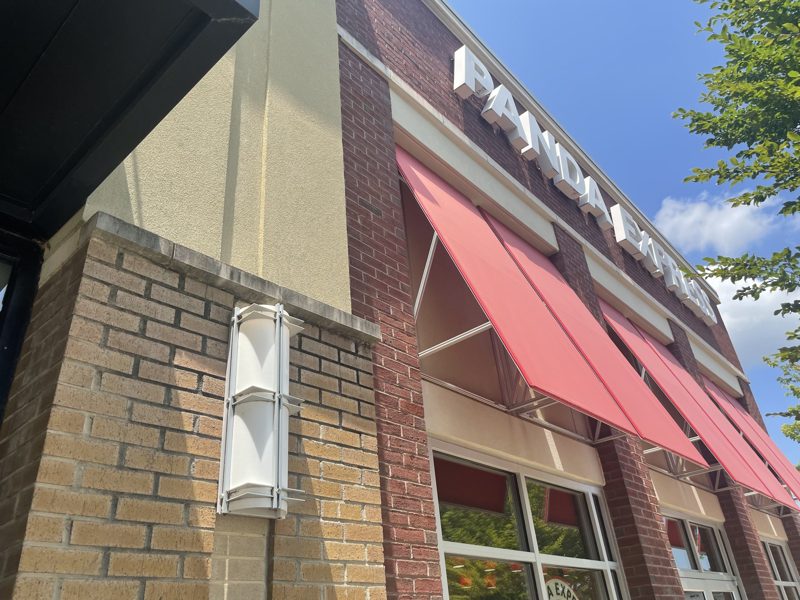
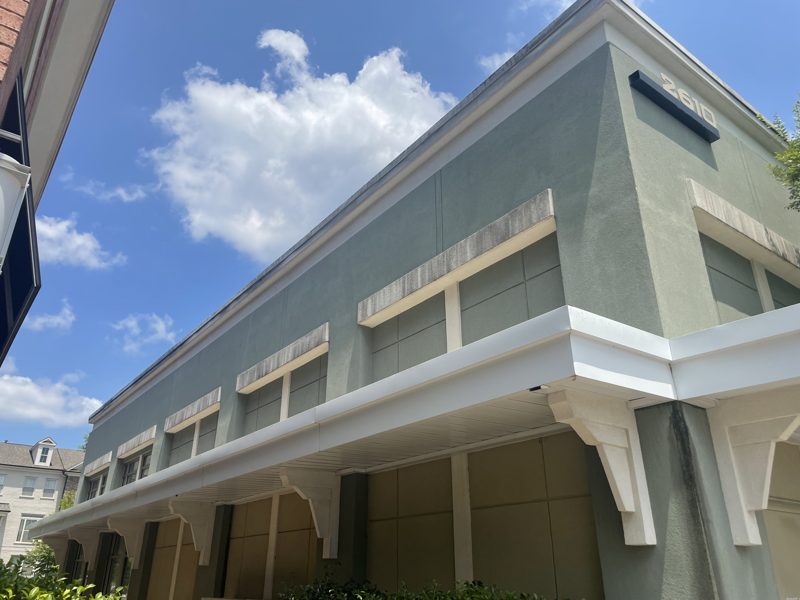
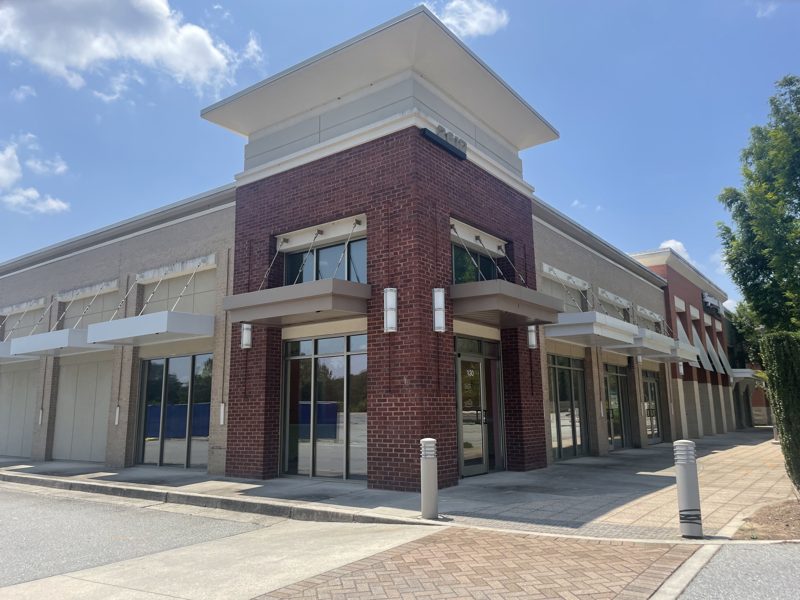
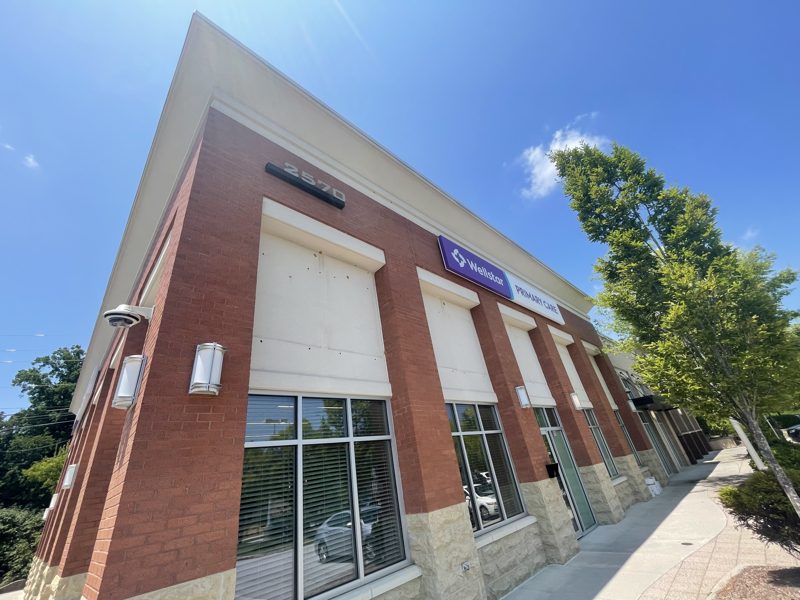
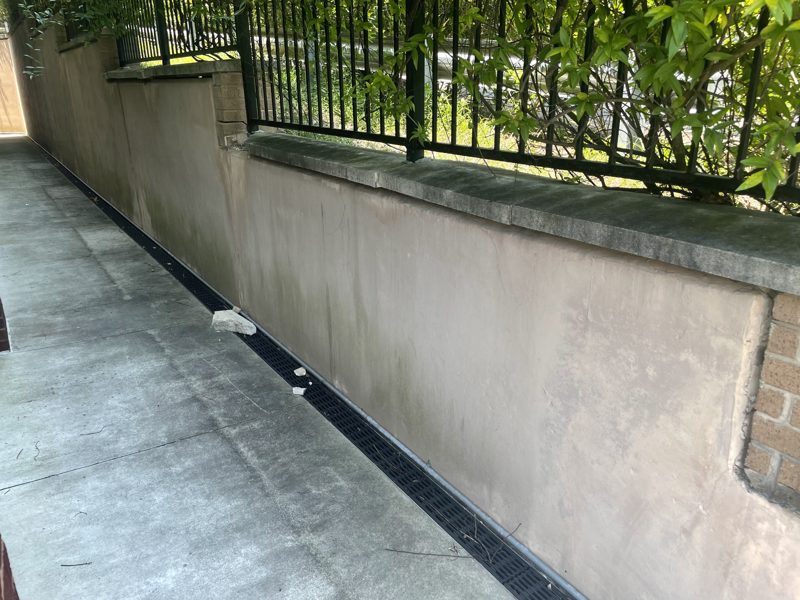
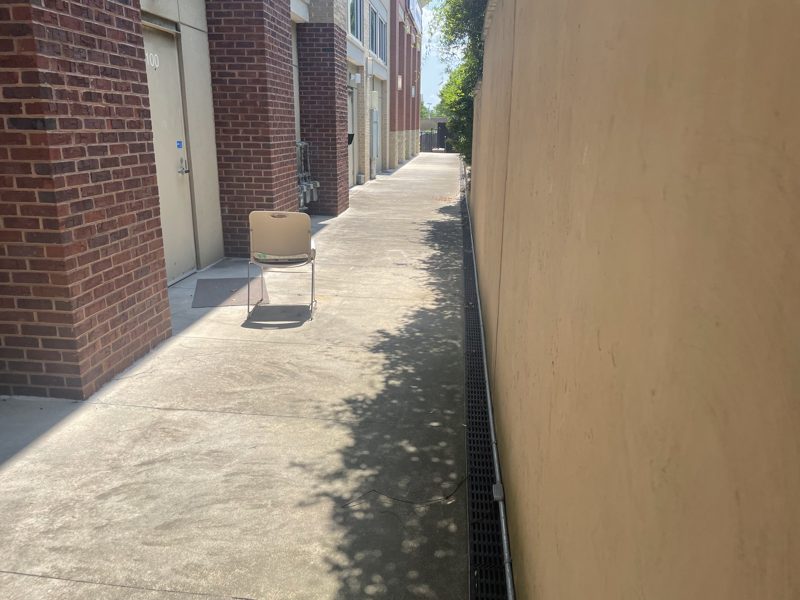
Commercial exterior work packages.
Thrare › For general contractors
You already have enough scopes to chase. Ours should not be one of them.
Materials supply
Send the material schedule or the plan sheet and we price it by the unit your order uses, delivered to the job or FOB pickup.
| Material | Typical use |
|---|---|
| Graded aggregate base (GAB) and crusher run | Road base, building pads, parking lots |
| #57 stone | Drainage, pipe bedding, concrete |
| Rip rap | Ditches, outfalls, stream banks |
| Asphalt millings (RAP) | Unpaved roads, parking areas, driveways |
| Crushed concrete | Road base, parking lots, driveways, fill |
| Recycled gravel | Base for site work, drives and drainage. Also Marietta and Roswell |
| Concrete recycling | Demolition concrete taken in and returned as aggregate |
| Silt fence and erosion control | Silt fence, inlet protection, drain mats, wattles, blankets |
What you get
The promise does not change when we are the subcontractor. It applies to the package you assign us rather than to the whole project.
We sequence our package against your dates and access windows, not our own convenience.
Progress and completion evidence supplied in the format your project controls use.
Inspection criteria agreed up front so the package closes without a punch-list argument.
DBE and ACDBE through the Georgia UCP where a contract carries a goal, subject to confirmation against that solicitation.
Best fit scopes
These are the scopes we self-perform or have a documented record in.
Work packages
Elevations, walkways and entries on commercial property, run as a defined package against a schedule.
Commercial exterior work packages.
Your schedule
We report against your dates and your acceptance criteria.
You already have scopes to chase. Ours is meant to be the one that reports itself.
The constraint
The exterior package is usually small against the contract value and large against the risk, because it sits at the end where there is no float left to give.
By the time exterior cleaning, striping, preservation or debris removal comes up, the schedule has already absorbed whatever slipped earlier. The package is worth a fraction of the job and it stands between you and substantial completion. That asymmetry is the whole problem: a sub who is late by three days on a small package can hold an owner walkthrough that everything else was ready for.
The three failures that actually cost a prime are predictable. A sub mobilises without confirming the work area is released, so the crew stands down and the day is billed to somebody. A sub finishes the work and cannot produce the documentation the owner requires, so acceptance stalls behind paperwork rather than behind work. Or the sub is reachable during the bid and not during the build.
We are set up to be the package that does not do those three things. The work is scoped against your schedule dates, not against ours, and we confirm area release before a crew leaves the yard. If an area is not ready we say so the day we learn it, not on the invoice.
Scope
Named scopes, so you can price the package against your own estimate rather than against a description.
Facade, walkways, entries, hardscape and adjacent paving cleaned after trades are out. Mortar haze, adhesive residue, tire marking and construction soil are different problems with different methods, and pressure alone solves none of them cleanly.
Sequenced after final trade release
Lot and deck layout, stall striping, directional markings, and accessible spaces with the signage and access aisles the standard requires. Layout is set out before paint goes down, because a restripe over a wrong layout costs more than the original.
The counts are fixed and worth checking against your drawings early. Under section 208.2 of the ADA Standards, a lot of 1 to 25 spaces requires 1 accessible space and that space must be van accessible; 26 to 50 requires 2; a facility of 501 to 1000 requires 2 percent of the total; and above 1000 the requirement is 20 plus 1 for each 100 or fraction over 1000. At least 1 of every 6 accessible spaces must be van sized, and the access aisle beside a space is at least 60 inches wide and as long as the space itself.
Those are federal minimums. A local code or a tenant standard can require more and never fewer, so the drawing governs where it is stricter.
Set out, then painted
Construction debris, bulk removal, and site clearing, with material separated where the project has a diversion requirement to report against.
Separated where diversion is tracked
Board-ups, securing, lock changes and stabilization on vacant or partially occupied assets, including work that has to happen between phases rather than at the end.
Available between phases
Price
Most disputes on a small package are not about the rate. They are about what the rate was understood to include.
In the number: mobilization, labor, equipment, water handling and containment where the scope produces runoff, consumables, and the close-out documentation the package needs for acceptance. Cleanup of our own work area is ours, not yours.
Not in the number, and priced separately when the project needs it: work outside the released area, remobilization caused by an area that was not ready at the confirmed time, after-hours or weekend sequencing where the schedule requires it, disposal of material we did not generate, and any scope added after the package is set. None of that is unusual. It is listed so it is a line item and not an argument.
Change is handled in writing before the work happens. A verbal add on a small package is how a prime ends up with an invoice nobody remembers authorising, and we would rather lose the add than bill you for a surprise.
Certifications
This section is deliberately conservative, because a prime that relies on a subcontractor's certification and finds out late has a real problem.
Rare Earth Ltd, doing business as Thrare Contracting, is a certified Disadvantaged Business Enterprise through the Georgia Unified Certification Program, and a certified Minority Business Enterprise. The firm is registered and active in SAM.gov with CAGE code 9JAV8 and UEI Z4WKS4UE8NJ6, and self-represents as a Small Disadvantaged Business. Those are the certifications held, and each one is verifiable against its issuing registry rather than against this page.
We do not hold HUBZone certification, 8(a) certification, or SOC 2 attestation, and we will not be represented as holding them on your submission. If a solicitation requires one of those, we are the wrong subcontractor for that line and we would rather tell you at bid time.
On goal counting, confirm the current rule for your specific contract rather than relying on a vendor page. Federal DBE goal treatment has been subject to rulemaking, and how participation is credited can differ between a federally assisted contract, a state contract and a local or private one. The certification itself is a fact you can verify today. Whether it counts toward a particular goal on a particular contract is a question for the contracting agency, and we will supply whatever documentation your compliance team needs to answer it.
From you
Short list. Every item on it exists because its absence has delayed somebody's package.
A named point of contact who can confirm area release, and a second name for when the first is on another site. The schedule dates for our window, and notice when they move, which they will. Confirmed access: gates, badges, elevator or lift reservations on a deck or a mid-rise, and where our crew parks. Water and power sources, or confirmation that we bring our own. Any site-specific safety orientation, and whether it has to be repeated per crew or per person.
For close-out, tell us at award what acceptance needs. A signed field ticket is a different artifact from a photo log, and a photo log is different again from a diversion report with weights on it. Every one of those is straightforward to produce when it is known at the start and awkward to reconstruct afterwards.
Questions
The questions that come up at prequalification, answered the way we would answer them on a call.
We do not bid work as prime where a performance bond is required. As a subcontractor under a bonded prime, bonding sits with you, which is the normal arrangement for a package this size. If your contract requires a subcontractor bond specifically, tell us at bid time so we can price it or decline the line honestly rather than discover it at award.
We are insured and provide a certificate naming your entity as additional insured before mobilization, on request, as part of prequalification. We do not publish coverage figures on a public page. Your risk manager should receive the certificate itself and read the limits off the document rather than off a website.
Metro Atlanta and the surrounding counties, including Fulton, DeKalb, Cobb, Gwinnett, Cherokee, Forsyth and Rockdale, with project work elsewhere in Georgia depending on duration and scope. Distance matters less than whether the schedule allows a crew to be productive once it arrives.
Yes, and most of what we do is occupied. Occupied work is sequenced in sections with posted notice, handed back section by section, so residents or tenants are never left without access to what they need. It takes longer than an empty site and it is planned that way from the start rather than discovered partway through.
Containment and discharge control are part of the scope where the work produces runoff, not an extra. Wash water carrying oil, solids or chemical residue does not go to a storm drain. Where a site has a specific stormwater requirement in its permit, tell us and we will work to it.
We confirm release before a crew leaves the yard, which prevents most of it. If the area is genuinely not ready at the confirmed time, we tell you that day and reschedule. Remobilization caused by an unreleased area is billable and it is named in the pricing section above, so it is a known line rather than a surprise.
Sources
Certification and registration status is checkable against the issuing registry, which is where you should check it.
Federal registration: SAM.gov entity record for Rare Earth Ltd, UEI Z4WKS4UE8NJ6, CAGE code 9JAV8.
DBE certification: Georgia Unified Certification Program, administered through the Georgia Department of Transportation.
Accessible parking counts in the striping scope: United States Access Board, ADA Standards for Accessible Design, chapter 5, Parking Spaces, section 208.2 of the 2010 Standards. Read 2026-08-31. The space counts, the one-in-six van ratio and the 60 inch access aisle are quoted from that source.
Wash water handling in the post-construction cleaning scope: United States Environmental Protection Agency, NPDES Stormwater Program, and 40 CFR Part 122.26. Wash water is a non-stormwater discharge and does not enter a storm sewer system without NPDES authorization, which is why containment is in the scope rather than priced as an extra. Read 2026-08-31.
Page maintained by Thrare Contracting, Rare Earth Ltd, 8735 Dunwoody Pl, Ste R, Atlanta, GA 30350.
Tell us the property, the scopes, the timing, and the role you need us in. If it fits, we walk the property and come back with a written scope, a schedule and a number, at no cost to you for the walk. If it does not fit, we will tell you that instead of quoting it.
We aim to reply to every submission within one business day, from a person. Prefer to talk first? Call 678-748-3578.