The work
Make ready, in sequence.
Cleanout first, work above the floor next, finished surfaces last.
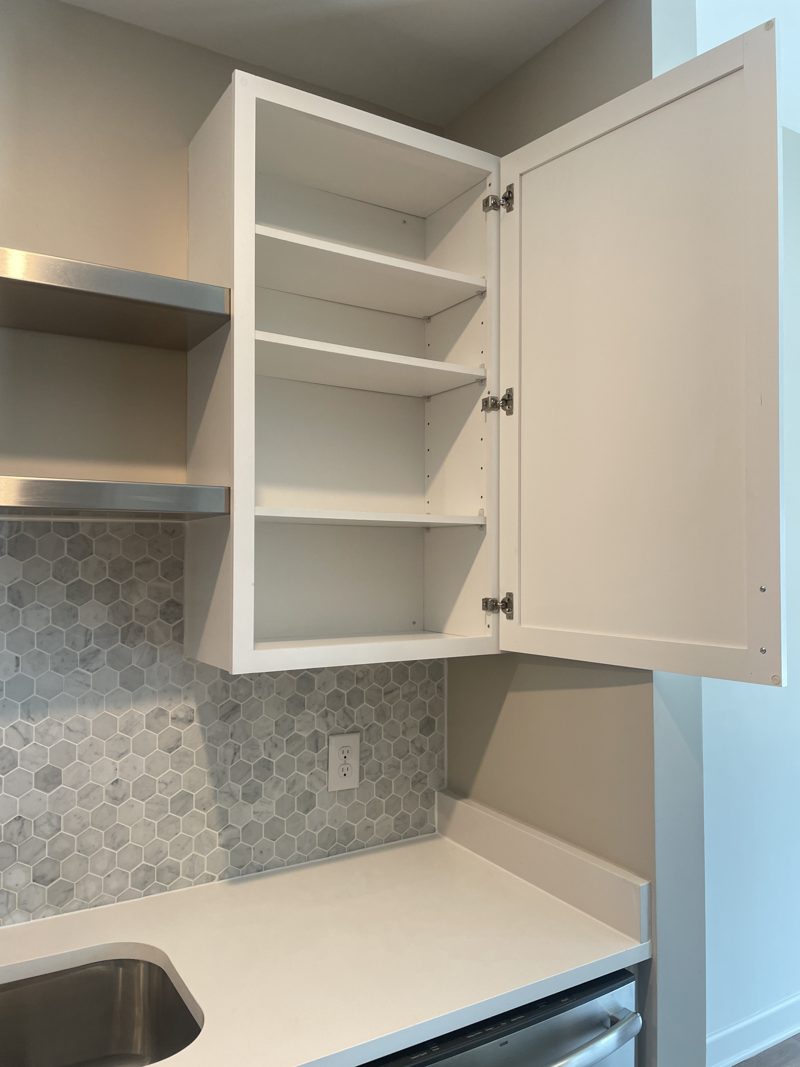
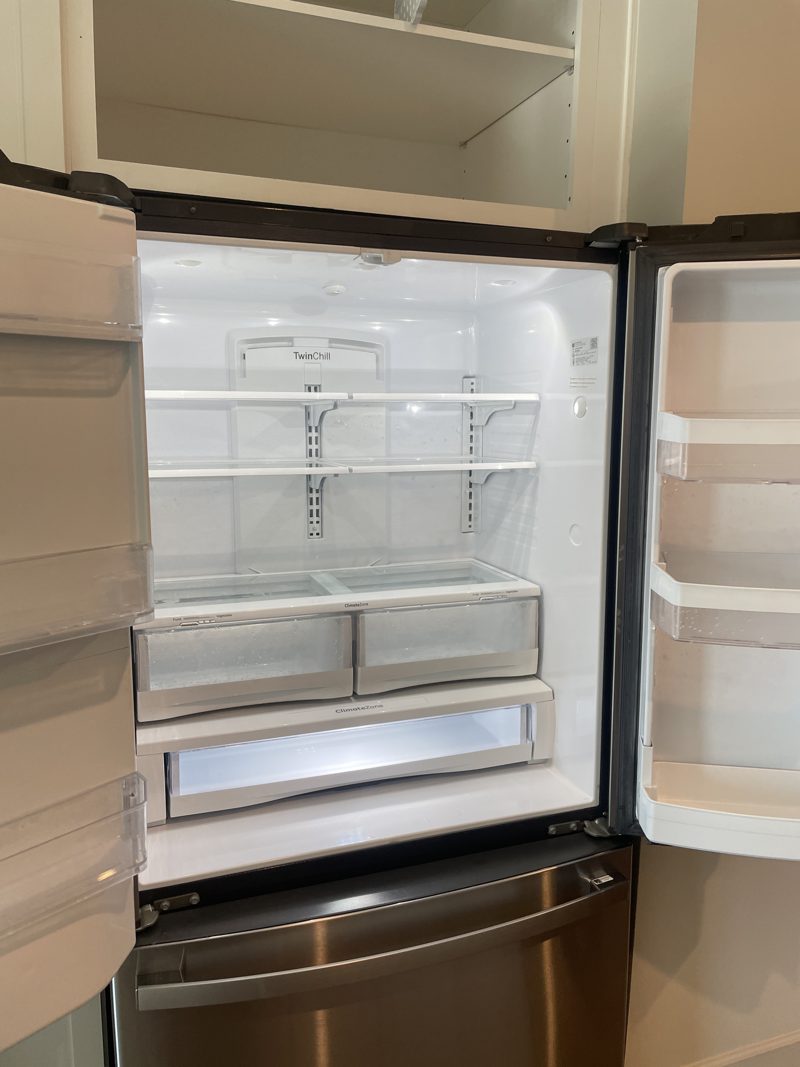
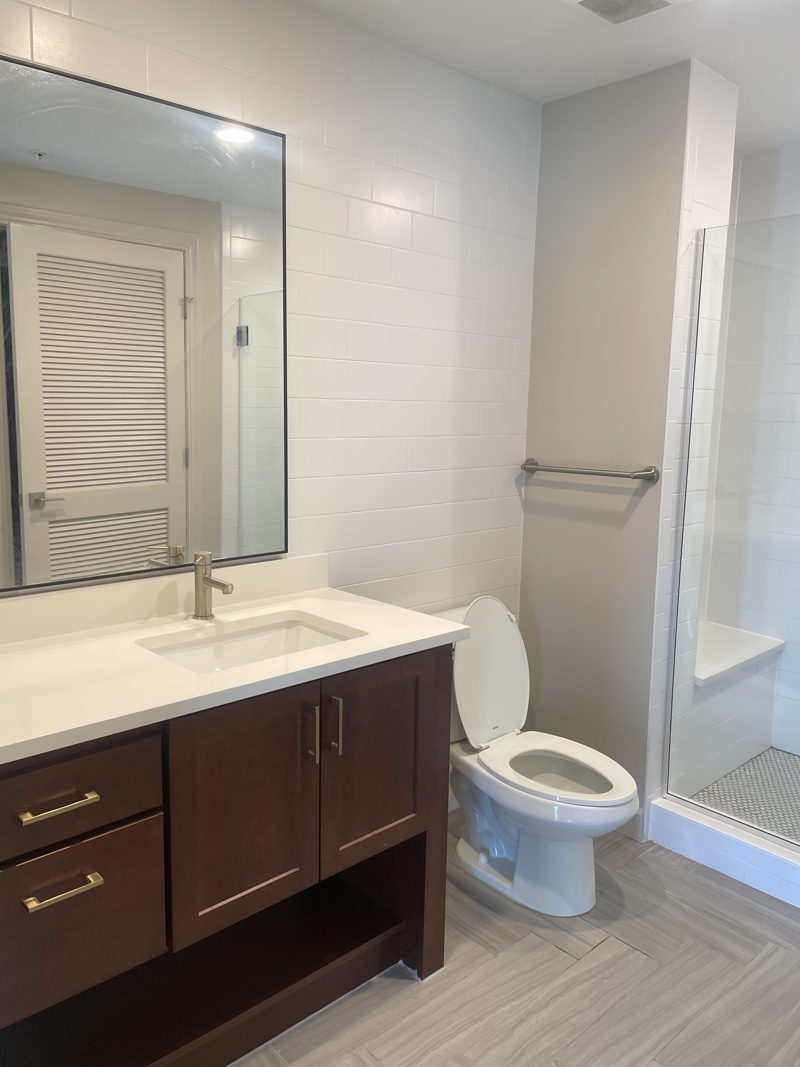
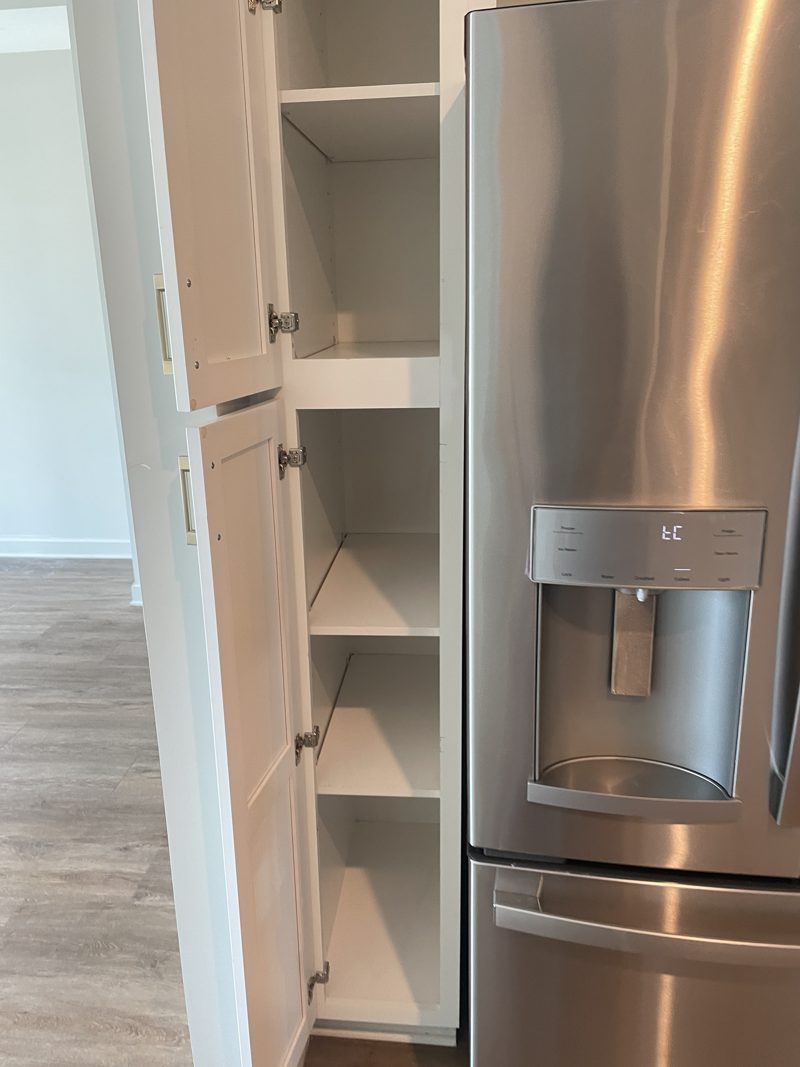
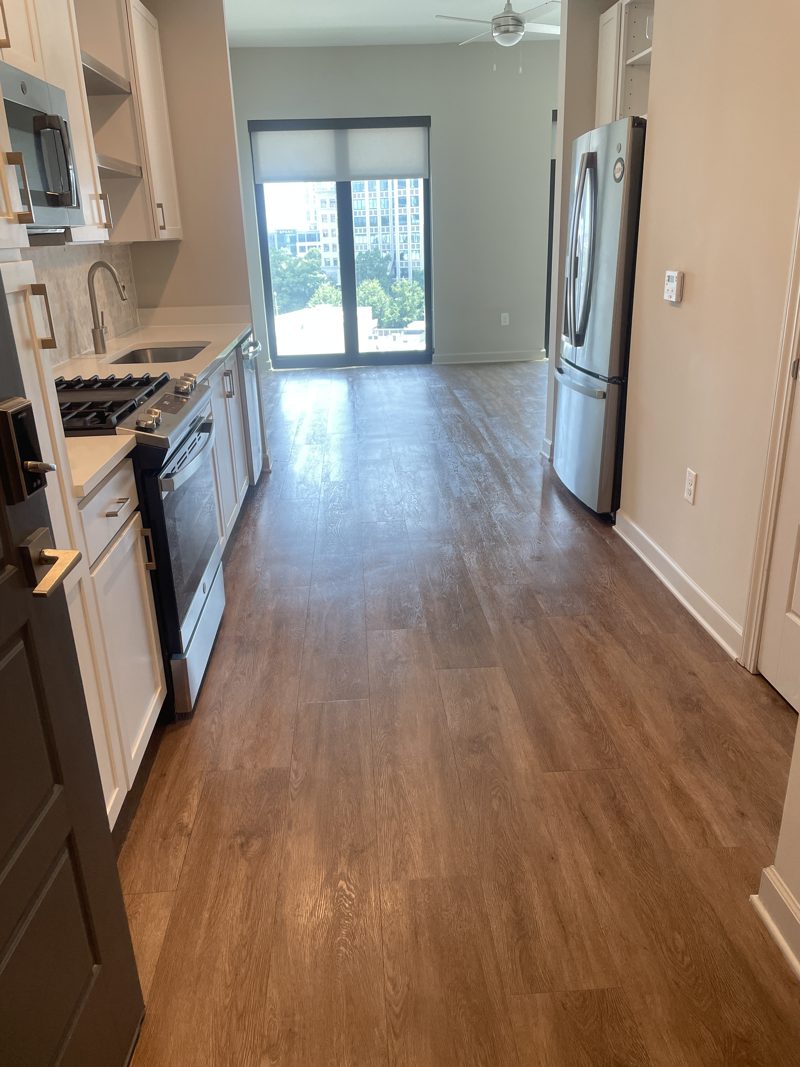
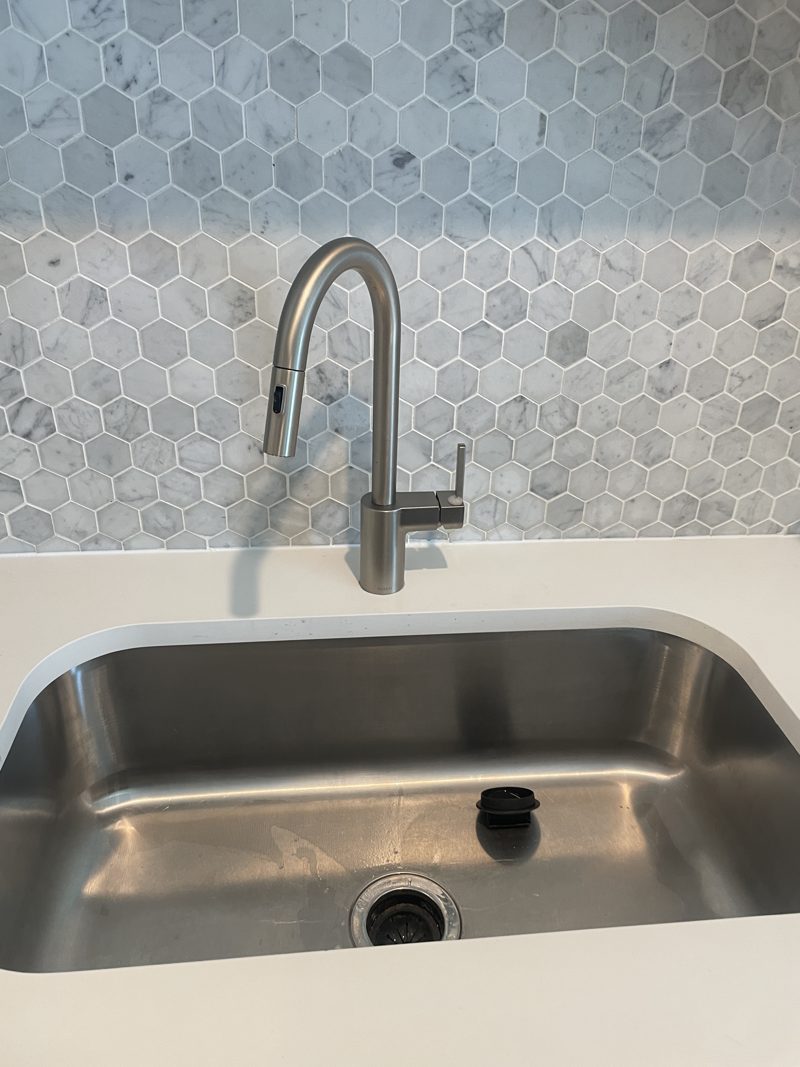
Make ready interiors on a multifamily turn.
Thrare › How we run a turn program
The trades in a unit turn are not hard. Doing them in batches, in the right order, with an inspection at the end, is where vacancy is actually recovered. This page sets out the method. No client, property, unit count or completed result is described here.
The property
Vacated units requiring cleanout, make ready and final detail before they could be shown and leased, alongside the common areas residents and prospects walk through on the way.
Bought unit by unit, a turn carries its own mobilization, its own scheduling call and its own quality argument. Ten units bought that way are 10 procurements. The trades are identical each time and the overhead is paid 10 times.
Run as a program, the same work carries one schedule, one standard and one acceptance process. That difference is worth more than any per unit price negotiation, because the per unit price is the smaller of the two numbers a vacant unit costs.
What this page is, stated plainly. This page describes how Rare Earth Ltd structures a multifamily turn program in metro Atlanta. No client, property name, unit count, dollar value, timeline or completed result appears on this page, because none has been published. Every figure below is an industry or regulatory figure, and each one is attributed in the Sources section with the date it was read.
The work
A unit turn is 4 small scopes in a fixed order, and the order matters more than any single task in it.
Interior cleanout and removal of what the previous resident left, with the load hauled rather than staged on site.
Kitchens, baths, appliances, cabinetry and fixtures brought to a showable condition.
Hard floors and finished surfaces cleaned last, after the work above them is complete.
Breezeways, entries and shared surfaces cleaned on the same schedule, so a clean unit is not reached through a dirty building.
How it runs
A batched turn program runs on 5 controls, and the schedule rather than the scope is what those controls protect.
What you get back
The result a manager can act on is throughput, not the condition of any single unit.
A property gets units back in batches against a single schedule, at one acceptance standard, with the common areas brought along rather than left to be noticed later by a prospect. Each unit carries a photographic record filed against it.
That record is what lets a turn be approved from a desk. An undocumented turn is a conversation. A documented one is an invoice a manager can sign.
Rare Earth Ltd has operated in metro Atlanta since 2020 and has completed more than 500 projects across commercial, multifamily and public work. Rare Earth Ltd holds DBE, ACDBE, MBE and SDB certifications, is registered in SAM under UEI Z4WKS4UE8NJ6 and CAGE 9JAV8, and uses E-Verify. Rare Earth Ltd does not hold HUBZone status, 8(a) status or a SOC 2 attestation, and none of those three should be assumed from the list above.
Straight answers
Six questions come up on almost every turn conversation, and the answers do not change from property to property.
Batching starts paying at the second unit, because the second unit is where a mobilization stops being repeated. The structure is built for volume, so a property with a steady flow of 2 or 3 units a week is usually better served by a standing program than by a block of 20 units bought once.
Yes, and skipping the common areas is the most common miss on a turn program. Breezeways, entries, stair treads and walkways are what a prospect walks through before reaching the unit, and cleaning them while a crew is already on the property removes a separate mobilization later.
The property sets the acceptance standard, and Rare Earth Ltd agrees it in writing before the first unit is scheduled. A written standard is what stops handover from becoming an argument, because both parties are then reading the same document rather than describing the same unit differently.
No. NSPIRE governs HUD-assisted and HUD-insured housing, so a conventional market-rate community in Atlanta has no NSPIRE score and is not inspected under it. A market-rate owner can still adopt the published NSPIRE thresholds as a written house standard, which is the only sense in which they are used on this page.
Not under HUD's NSPIRE standard for Mold-Like Substance, which states: "Note that algae are not mold-like substances (algae are grass-green)." That standard's location table lists Outside as None. Green growth on an exterior wall is a surface and appearance condition, and Rare Earth Ltd does not sell an exterior wash as mold remediation.
A property needs a completed Form W-9 and a certificate of insurance, and Rare Earth Ltd provides both on request. According to the Internal Revenue Service, a payer is required to withhold at the current rate of 24 percent where a correct taxpayer identification number was not provided, which is why the W-9 is worth collecting before the first unit is scheduled rather than after the first invoice arrives.
The work
Cleanout first, work above the floor next, finished surfaces last.
Make ready interiors on a multifamily turn.
The economics
A turn program is negotiated on price per unit and won or lost on calendar days, and only one of those two appears on the invoice.
The National Apartment Association puts the turnover rate across apartment rentals at 46.8 percent, and puts the average cost of a single move-out, conservatively calculated, at $1,800. For a 200 unit community the National Apartment Association totals that at more than $168,000 in annual turnover expense.
Read the provenance before quoting any of those three. The National Apartment Association draws them from its 2019 Survey of Operating Income & Expenses in Rental Housing Communities, republished in NAA guidance dated 2025-03-06. The 46.8 percent rate is a 2019 survey figure and not a current-year rate, and it belongs in a conversation as an order of magnitude rather than as anyone's exact number.
| Measure | Figure as the source states it | Basis |
|---|---|---|
| Turnover rate, apartment rentals | 46.8 percent | 2019 NAA survey |
| Average cost of a single move-out | $1,800 | 2019 NAA survey, conservatively calculated |
| Annual turnover expense, 200 unit community | more than $168,000 | 2019 NAA survey, applied to 200 units |
| Average guideline to turn a unit | 7 working days | NAA guidance, many companies |
| What management groups frequently expect | 5 working days | NAA guidance |
| What management groups expect at times | 3 working days | NAA guidance |
On duration, the National Apartment Association records that many companies use 7 working days as an average guideline to turn a unit, while management groups frequently expect 5 and at times 3. That spread is the whole argument. Each day between 7 and 5 is rent that was available and was not collected, and none of it appears in the turnover expense line at all.
Those lost days land in vacancy loss, on a different report, read by a different person, which is why the day count is systematically under-managed relative to its size. The move-out cost is invoiced, visible and argued over. The vacancy day is absorbed and rarely attributed to the turn that caused it.
A turn program is worth running when it moves the day count, not when it shaves the unit rate. Negotiating 10 percent off a turn price on a unit that takes 9 days instead of 5 is optimizing the smaller of the two numbers, and it is the number the property was already controlling.
Where days go
Nobody in a slow turn is being slow. Each vendor does their piece in reasonable time and the unit is still ready on day 9.
The standard sequence is trash-out, clean, paint, repairs, final clean. Those 5 steps carry 4 handoffs, and each handoff is a scheduling negotiation between parties who do not share a calendar. The painter arrives before the trash-out finished. The floor installer comes after paint but before touch-up. Each slip is half a day, and nobody billed for any of it, which is exactly why nobody is looking for it.
Batching is what removes them. Units are grouped so a crew works a set rather than a single unit, the sequence inside a batch is fixed in advance, and the inspection happens at the end of the batch rather than after each trade. That is why one vendor across the whole turn is faster: not because any task is performed quicker, but because there is nothing to coordinate between the tasks.
The second source of lost days is approval. Damage beyond normal wear is routine, and a photograph waiting in an inbox is a unit sitting empty. A named approver and a standing threshold for what does not need approval at all is usually worth more than any rate concession.
The standard
HUD puts measured numbers on litter, trip hazards and exterior walls, which is exactly what a written turn standard usually lacks.
The U.S. Department of Housing and Urban Development publishes the National Standards for the Physical Inspection of Real Estate, known as NSPIRE, as individual standard documents. Each document names a deficiency, states the observation that triggers it, and assigns a determination and a correction timeframe. The observations are written as measurements rather than as opinions, and that is the part worth borrowing.
NSPIRE governs HUD-assisted and HUD-insured housing, not conventional market-rate apartments. A market-rate community in metro Atlanta has no NSPIRE score, is not inspected under NSPIRE, and cannot fail it. Nobody should tell an owner otherwise, and Rare Earth Ltd does not. What a market-rate owner can do is adopt the published thresholds as a house standard, because a threshold stated as a measurement can be settled by a tape measure instead of by a phone call.
| Standard | Observation as the standard states it | Determination and timeframe |
|---|---|---|
| Litter, Outside | "10 or more small items of litter (e.g., food wrappers, pieces of food, newspapers) are present within a 10-foot by 10-foot area not designated for garbage", or any number of large discarded items | Low, 60 days |
| Litter, Inside | The same observation, recorded inside | Moderate, 30 days |
| Trip Hazard | "An unintended 3/4-inch or greater vertical difference", or "an unintended 2-inch or greater horizontal separation that is perpendicular to the path of travel", on a walking surface along the normal path of travel | Moderate, 30 days |
| Wall - Exterior, 1 | "Exterior wall covering has missing sections of at least 1 square foot per wall" | Moderate, 30 days |
| Wall - Exterior, 2 | "Exterior wall has peeling paint of 10 square feet or more" on a wall built after 1978 | Moderate, 30 days |
Two of those rows are worth reading twice. HUD rates the litter observation Low with a 60 day correction timeframe when it is recorded Outside, and Moderate with a 30 day timeframe when the same observation is recorded Inside, so quoting either one on its own as "the NSPIRE rule" states the standard incorrectly. HUD applies the trip hazard determination of Moderate and 30 days in all 3 locations, Outside included, which is why the walkway is not a lesser scope than the unit.
One line in HUD's Mold-Like Substance standard is worth quoting exactly, because exterior cleaning marketing routinely gets it backwards. The standard states: "Note that algae are not mold-like substances (algae are grass-green)." The same standard's location table lists Outside as None. Green growth on a breezeway wall is therefore not a mold finding under NSPIRE, and selling an exterior wash as mold remediation misstates a real federal standard.
The practical use on a market-rate turn is not compliance. A wall with peeling paint over 10 square feet and a walkway with a 3/4 inch vertical difference are arguable by measurement. "Clean", "in good repair" and "showable" are arguable forever, and most turn disputes are arguments about an unstated standard rather than about workmanship.
Price
Turn disputes are almost always about definition rather than about workmanship, so the definition goes in writing before unit 1.
Five things are inside the agreed turn price, and they are the same 5 on every unit in the program.
Four things are outside it, and every one of them is quoted with photographs attached before any work happens.
Rare Earth Ltd does not perform an over-scope item and explain it on the invoice. That practice is how vendors get short paid and how properties acquire costs nobody authorized, and it poisons a program that would otherwise run for years. The bid for an out-of-scope item goes out with photographs attached, so a manager can decide from a desk without a site visit and without a phone call that has to be returned.
Vendor setup
A turn program loses its first week in accounts payable more often than in the field, and none of that week is site work.
Form W-9 is the first document, and its purpose is narrower than most people assume. According to the Internal Revenue Service, Form W-9 is used to provide a correct Taxpayer Identification Number to the person who is required to file an information return with the IRS. The completed form is furnished to the requester and is not filed with the IRS by the contractor who completes it, so a property that is waiting on the IRS is waiting on nothing.
Collecting the W-9 early is worth real money to the payer rather than to the vendor. According to the Internal Revenue Service, there are situations when the payer is required to withhold at the current rate of 24 percent, and one of them is the BWH-B program, which applies where a payee failed to provide a correct taxpayer identification number to the payer for reporting on the required information return. Backup withholding is an obligation of the payer, not a penalty on the contractor, so the party with the exposure is the property.
A certificate of insurance is the second document, and Georgia says in its own rules exactly what one is worth. The Georgia Administrative Code, Rules of the Commissioner of Insurance, Section 120-2-103-.05, requires a certificate to carry the statement that it "is issued as a matter of information only and confers no rights upon the certificate holder" and that it "does not amend, extend or alter the coverage, terms exclusions and conditions afforded by the policies referenced herein." A certificate is evidence that a policy existed on the day the certificate was issued. A property that wants a right under the policy has to negotiate that with the policy, not with the certificate.
Rare Earth Ltd issues a certificate of insurance to a property on request, and provides the rest of a vendor packet with it.
The last item on that list is the one that decides the day count most often. Damage beyond normal wear is routine on a turn, and a photograph sitting in an inbox is a unit sitting empty. A standing threshold removes the approval loop entirely for findings below it, and it costs a property nothing except the decision to set the threshold once.
Sources
Every figure above is quoted from a primary source, with the publisher named, the document dated and the year the data was collected stated where it differs from the publication year.
Page maintained by Thrare Contracting, Rare Earth Ltd, 8735 Dunwoody Pl, Ste R, Atlanta, GA 30350.
From you
The properties where a turn program works are not the ones with the biggest budget. They are the ones where 4 things get decided once instead of per unit.
A written turn standard is the one most often skipped, and it is the cheapest. Most arguments about quality are arguments about an unstated standard, and they stop the day the standard is written down and both sides have read it.
Notice of the move-out date rather than the vacancy date. A day of warning lets a unit be planned into an existing route instead of inserted as an exception, and an exception is what costs a day. Access that does not depend on one person answering their phone: a lockbox, a code, or keys held on site.
A named approver and a standing threshold below which nothing needs approving at all is the fourth. Damage beyond normal wear is routine. A photograph waiting for a decision is a unit sitting empty, and that single delay converts a 5 day turn into a 9 day turn more often than any field problem does.
And an inspection that happens at the end of a batch rather than after every trade. Inspecting each step individually feels rigorous and adds a queue at each handoff.
The record
A unit that cannot be shown was turned was not turned. The record is not administration attached to the work, it is the part of the work a manager can actually read.
Every unit gets a before set, taken before anything is touched, and an after set from the same positions. Same angles, same framing, so a manager compares two images rather than interpreting them. That consistency is what makes a hundred units reviewable in the time it would otherwise take to review twenty.
Where a condition is found that the scope did not anticipate, it is photographed as its own finding with the bid attached, not folded into the general set. Where something could not be completed, the reason is photographed rather than described, because a note is an assertion and an image is evidence.
The practical value shows up at deposit disputes and at ownership changes. A property that can produce a dated, consistent record per unit is in a materially different position from one relying on recollection, and neither of those situations is predictable at the time the photograph is taken. The record costs nothing extra at the moment of the work and is impossible to reconstruct afterward.
Tell us the property, the scopes, the timing, and the role you need us in. If it fits, we walk the property and come back with a written scope, a schedule and a number, at no cost to you for the walk. If it does not fit, we will tell you that instead of quoting it.
We aim to reply to every submission within one business day, from a person. Prefer to talk first? Call 678-748-3578.